Developing a custom GPS tracker is much more than placing a GNSS module, cellular modem, and battery on a PCB.
A reliable commercial tracking device requires careful coordination between hardware design, GNSS performance, antenna engineering, communication technology, embedded firmware, power management, enclosure design, tracking platform integration, testing, certification, and mass production.
For companies developing vehicle trackers, asset trackers, personnel badges, pet trackers, livestock tracking devices, or satellite tracking equipment, understanding the complete development process can significantly reduce development risks and shorten the path from an initial idea to a production-ready product.
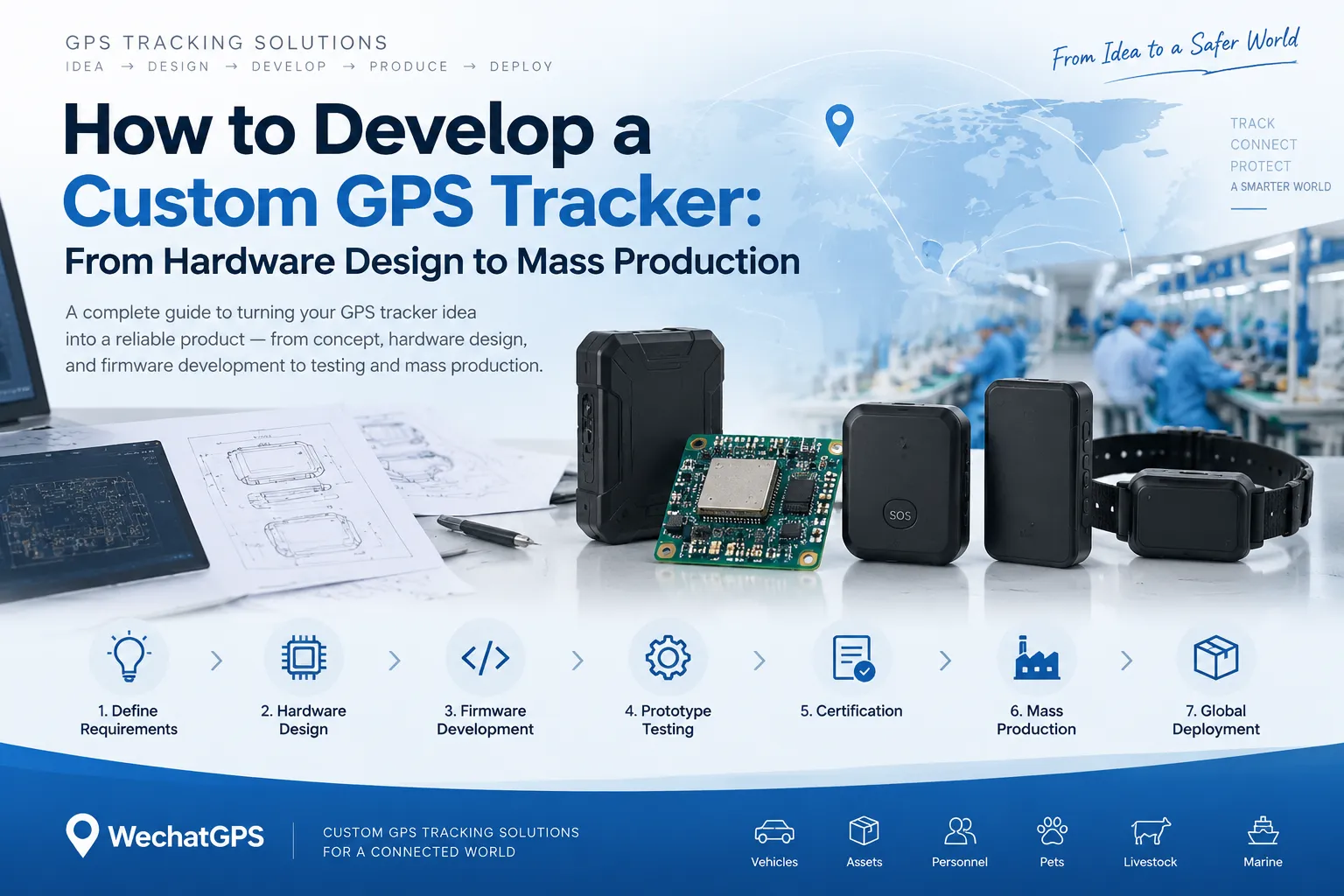
This guide explains the major stages involved in custom GPS tracker development, from defining product requirements to PCB design, prototype testing, firmware optimization, certification, and mass production.
1. Start With the GPS Tracker Application
Before selecting a GNSS module or designing a PCB, the first question should be:
Where will the GPS tracker be used?
Different applications require completely different hardware architectures.
Typical applications include:
- Vehicle GPS tracking
- Fleet management
- Asset tracking
- Trailer tracking
- Logistics monitoring
- Employee tracking
- Lone-worker safety
- Pet tracking
- Livestock tracking
- Construction equipment tracking
- Marine tracking
- Remote-area tracking
- Satellite communication tracking
For example, a vehicle GPS tracker can normally obtain continuous power from the vehicle and therefore support frequent location reporting.
A livestock collar or asset tracker may need to operate for months or years from a battery or solar charging system. In these applications, power consumption becomes one of the most important design considerations.
A personnel GPS badge has another set of requirements. Size, weight, charging convenience, SOS functions, indoor/outdoor positioning, and wearing comfort can be more important than extremely long battery life.
Therefore, the application should determine the hardware architecture—not the other way around.
2. Define the Product Requirements
A professional GPS tracker development project should begin with a clear Product Requirements Document, or PRD.
Important requirements include:
Positioning Requirements
Determine which positioning technologies are required:
- GPS
- BeiDou
- Galileo
- GLONASS
- Multi-constellation GNSS
- Wi-Fi positioning
- Cellular LBS positioning
- Bluetooth positioning
- RTK GNSS
For standard tracking applications, meter-level GNSS positioning is normally sufficient.
Applications such as precision agriculture, industrial machinery, surveying, robotics, and high-precision personnel positioning may require RTK GNSS.
Communication Requirements
Determine how location data will be transmitted.
Common options include:
- 4G LTE
- LTE Cat.1
- LTE-M
- NB-IoT
- 2G fallback
- LoRa
- LoRaWAN
- Wi-Fi
- Bluetooth
- Satellite communication
The communication technology should be selected according to coverage, power consumption, reporting frequency, deployment environment, and operating cost.
3. Select the GNSS Module
The GNSS module is one of the core components of a GPS tracker.
Module selection should not be based only on price.
Important specifications include:
- Supported satellite constellations
- Tracking sensitivity
- Acquisition sensitivity
- TTFF
- Positioning accuracy
- Update frequency
- Power consumption
- Operating voltage
- Communication interface
- Antenna requirements
- Operating temperature
Supporting multiple satellite constellations can improve satellite availability, particularly in difficult environments.
For example:
GPS + BeiDou + Galileo + GLONASS
can provide more visible satellites than relying on a single constellation.
However, the actual performance of the tracker depends not only on the GNSS chipset but also on antenna design, PCB layout, enclosure materials, installation position, firmware, and environmental conditions.
4. Choose the Communication Technology
Once the positioning architecture is determined, the next step is selecting how the tracker communicates with the server.
4G GPS Tracker
Cellular communication is widely used for:
- Vehicle tracking
- Personnel tracking
- Logistics
- Fleet management
- Asset tracking
A typical architecture is:
GNSS → MCU → 4G Module → Cellular Network → Cloud Server → GPS Tracking Platform
Depending on the target country, developers must select suitable LTE frequency bands.
A device designed for Europe may require a different cellular module from one designed for North America, Latin America, Asia, or Australia.
This should be confirmed before PCB development begins.
LoRa or LoRaWAN GPS Tracker
LoRa-based GPS trackers are useful when customers can deploy their own gateways or private IoT infrastructure.
Applications include:
- Livestock tracking
- Ranch management
- Industrial parks
- Mining
- Factories
- Construction sites
- Campus tracking
- Remote asset monitoring
Common LoRaWAN regional frequency plans include:
- EU868
- US915
- AU915
- AS923
- IN865
- KR920
- RU864
- CN470
The correct frequency plan should be selected according to the deployment country.
Satellite GPS Tracker
Cellular networks are not available everywhere.
Applications such as:
- Ocean transportation
- Remote ranches
- Mountains
- Deserts
- Forestry
- Remote infrastructure
- International logistics
may require satellite communication.
A satellite GPS tracker can collect GNSS coordinates and transmit them through a satellite network when terrestrial communication is unavailable.
Some custom products can also combine multiple communication methods:
Satellite + 4G + LoRa
The device can automatically select an available network according to its deployment environment.
5. Design the GPS Tracker PCB
After selecting the main components, engineers can begin schematic and PCB development.
A typical GPS tracker PCB may contain:
MCU
The microcontroller manages:
- GNSS
- Communication
- Sensors
- Sleep mode
- Power management
- Alarm logic
- Data storage
- Device protocol
MCU selection has a major influence on cost, power consumption, available interfaces, firmware architecture, and future scalability.
GNSS Circuit
The GNSS section normally includes:
- GNSS module or chipset
- RF matching circuit
- Antenna connection
- Power filtering
- Backup power circuit
RF layout is particularly important.
Poor PCB layout can reduce GNSS sensitivity even when a high-quality GNSS module is used.
Communication Circuit
Depending on the product, the PCB may include:
- 4G modem
- LoRa transceiver
- Wi-Fi
- Bluetooth
- Satellite communication module
Some industrial trackers use two or three communication technologies on the same PCB.
6. GPS Antenna Design Is Critical
A common mistake in GPS tracker development is focusing heavily on the GNSS module while treating the antenna as a secondary component.
In reality, antenna performance can determine whether a product works reliably in the field.
Developers should consider:
- Antenna type
- Antenna dimensions
- Ground plane
- RF matching
- Cable loss
- Enclosure material
- Battery position
- Cellular antenna interference
- Installation orientation
A tracker may perform perfectly on an engineering desk but experience poor GNSS reception after being installed inside a vehicle, metal container, livestock collar, or industrial enclosure.
Therefore, antenna testing should be performed in the final mechanical structure.
7. Design the Power Management System
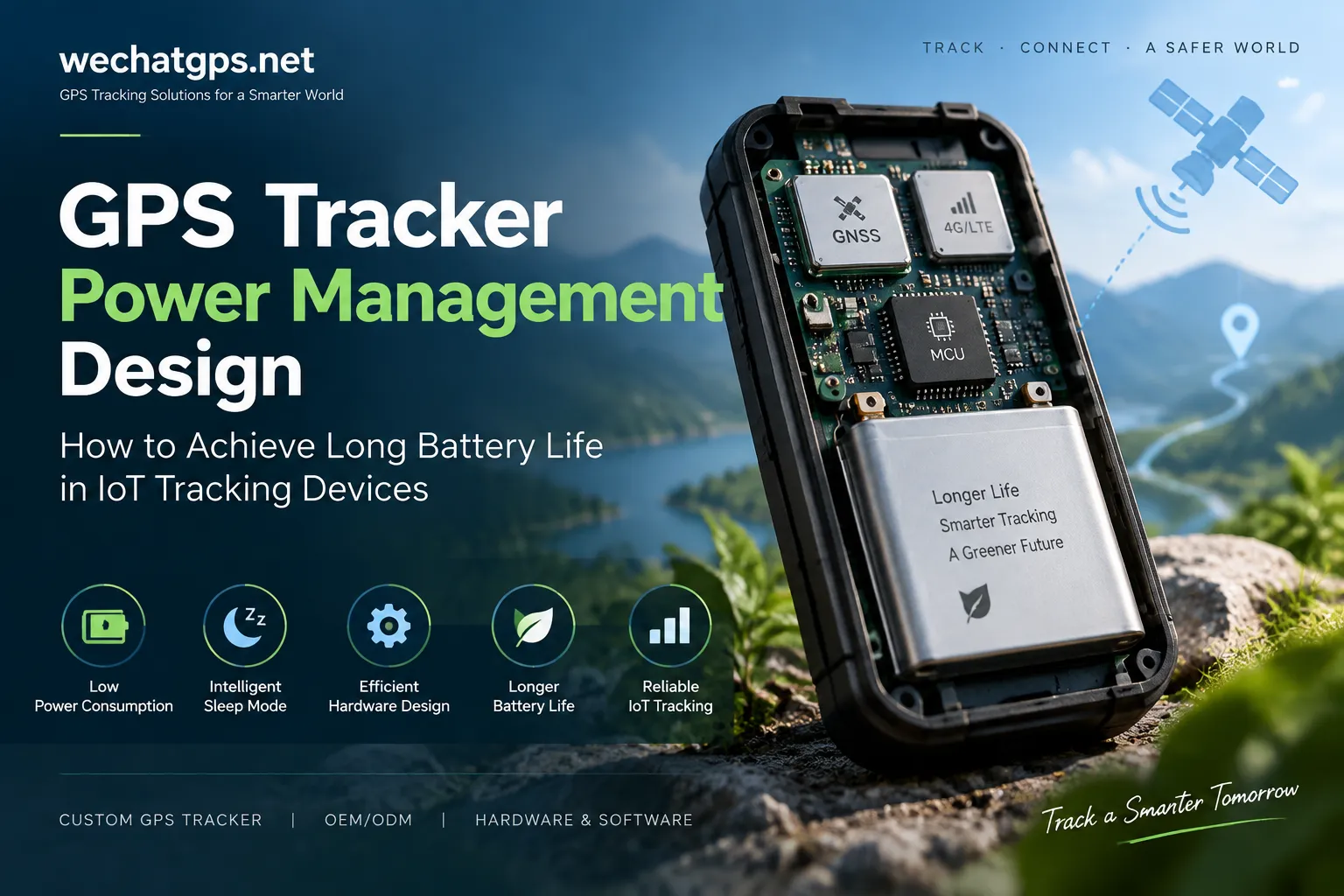
Power consumption is one of the biggest engineering challenges in portable GPS tracking devices.
A battery-powered GPS tracker normally operates through several states:
Deep Sleep → Wake Up → GNSS Positioning → Data Transmission → Server Response → Sleep
The engineering goal is to minimize the time spent in high-power states.
Important factors include:
- MCU sleep current
- GNSS acquisition time
- Cellular registration time
- Transmission duration
- Sensor consumption
- Battery self-discharge
- Voltage regulator efficiency
- Reporting interval
- Network signal quality
For example, a tracker reporting once every minute consumes dramatically more energy than a tracker reporting once per day.
Therefore, claims such as "3-year battery life" or "5-year standby" cannot be evaluated based on battery capacity alone.
Battery life depends on the complete operating profile.
8. Select the Battery
Battery selection depends on the application.
Common options include:
- Rechargeable lithium battery
- Li-polymer battery
- LiFePO4 battery
- Primary lithium battery
- Replaceable battery
- Solar charging battery system
A magnetic asset tracker may use a large internal battery.
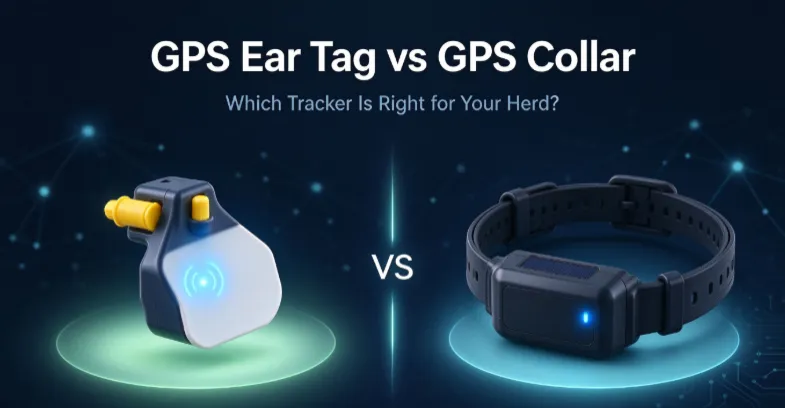
A pet tracker usually requires a small rechargeable battery.
A livestock GPS collar may combine a high-capacity battery with solar charging.
Battery engineering should consider:
- Capacity
- Maximum discharge current
- Charging temperature
- Operating temperature
- Cycle life
- Physical dimensions
- Safety protection
- Self-discharge
9. Add Sensors According to the Application
Modern GPS trackers are often IoT sensor devices rather than simple positioning terminals.
Optional sensors can include:
- Accelerometer
- Gyroscope
- Temperature sensor
- Light sensor
- Hall sensor
- Tamper detection
- Fuel sensor
- Door sensor
- External digital input
- Analog input
An accelerometer can be particularly useful for power management.
For example, the tracker can remain in deep sleep while stationary and automatically wake when movement is detected.
This can significantly extend battery life.
10. Develop the Embedded Firmware
Hardware is only half of the GPS tracker.
Firmware determines how the device actually behaves.
A typical firmware architecture controls:
- GNSS positioning
- Communication
- Power management
- Reporting intervals
- Alarm detection
- Local data storage
- Server commands
- OTA updates
- Sensor processing
- Watchdog recovery
The firmware should also handle abnormal conditions.
Examples include:
- GNSS cannot obtain a fix
- Cellular network registration fails
- Server connection fails
- SIM card fails
- Battery voltage becomes too low
- Communication module becomes unresponsive
- MCU enters an unexpected state
A robust tracker should be able to recover automatically from many temporary failures.
11. Implement Watchdog and Recovery Mechanisms
Commercial GPS devices may operate unattended for months or years.
It is therefore important to implement hardware and software recovery mechanisms.
These may include:
- MCU watchdog
- Communication module watchdog
- GNSS reset
- Network reconnection
- Automatic reboot
- Abnormal current detection
- Firmware state monitoring
For long-life asset trackers and livestock trackers, remote recovery is especially important because physically accessing the device may be difficult or expensive.
12. Develop the GPS Communication Protocol
The GPS tracker needs a protocol to communicate with the tracking server.
Typical uploaded data includes:
- Device ID
- Timestamp
- Latitude
- Longitude
- Speed
- Direction
- Satellite count
- Battery voltage
- Network signal
- Alarm status
- Sensor data
The server may also send commands to the tracker.
Examples include:
- Change reporting interval
- Request current location
- Restart device
- Configure geofence
- Control relay
- Change server address
- Update device parameters
Custom protocols can be developed for specific platforms or enterprise projects.
13. Integrate the GPS Tracking Platform
A complete tracking solution normally includes:
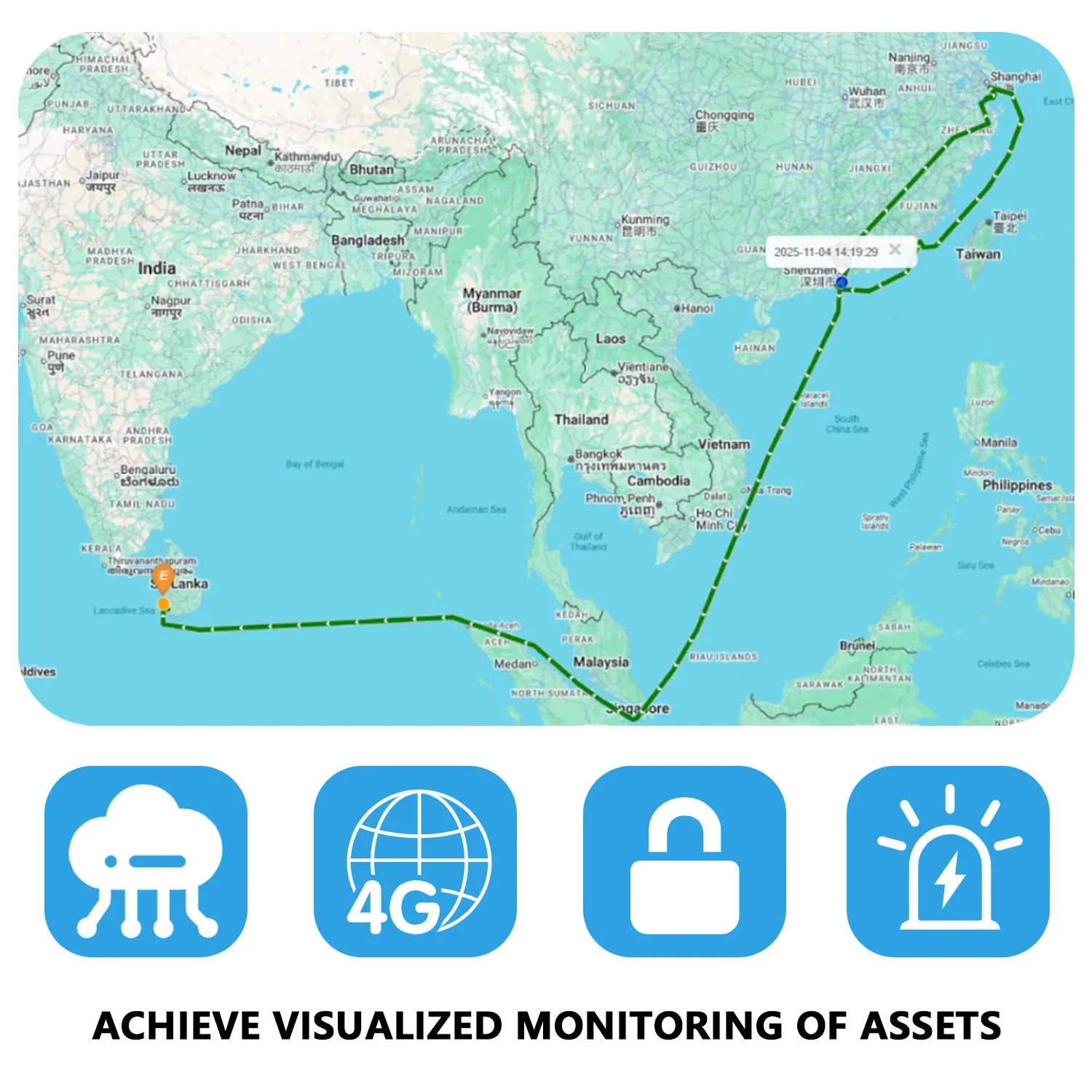
GPS Device + Communication Network + Server + Database + Web Platform + Mobile App
Typical platform functions include:
- Real-time tracking
- Historical route playback
- Device management
- Geofence management
- Alarm management
- User management
- Battery monitoring
- Device status monitoring
- Reports
- API integration
OEM customers may choose a white-label GPS tracking platform or integrate the device into their own system through API and communication protocols.
14. Build the First GPS Tracker Prototype
After the schematic and PCB layout are completed, the first prototype can be produced.
The prototype stage is used to verify:
- PCB functionality
- GNSS performance
- Cellular communication
- LoRa communication
- Satellite communication
- Sensor operation
- Battery charging
- Power consumption
- Firmware stability
The first prototype should not immediately proceed to mass production.
Problems found at this stage are much cheaper to correct than problems discovered after thousands of units have been manufactured.
15. Test Real Power Consumption
For battery-powered GPS trackers, engineers should measure current consumption in every operating state.
Typical measurements include:
Deep Sleep Current
Determines long-term standby consumption.
GNSS Positioning Current
Measures consumption while acquiring satellite signals.
Communication Current
Cellular and satellite modules can generate significant current peaks during transmission.
Complete Working Cycle
The most useful measurement is often:
Energy consumed per complete reporting cycle.
This allows engineers to estimate realistic battery life based on the customer's reporting strategy.
16. Design the GPS Tracker Enclosure
After the PCB is stable, the mechanical enclosure can be finalized.
Depending on the application, the enclosure may require:
- IP65
- IP67
- IP68
- UV resistance
- Impact resistance
- Vibration resistance
- High-temperature resistance
- Low-temperature resistance
Installation methods can include:
- Magnetic mounting
- Screws
- Cable ties
- Vehicle hidden installation
- Collar mounting
- Wearable clip
- Wrist strap
The enclosure should also avoid blocking GNSS and communication antennas.
17. Perform Environmental and Reliability Testing
A production-ready GPS tracker should be tested under realistic conditions.
Depending on the application, testing may include:
- High-temperature testing
- Low-temperature testing
- Temperature cycling
- Waterproof testing
- Drop testing
- Vibration testing
- Charging testing
- Battery aging
- Long-duration operation
- Network interruption recovery
Field testing is equally important.
A livestock tracker should be tested on animals.
A vehicle tracker should be installed in real vehicles.
An asset tracker should be tested in the intended logistics environment.
Laboratory testing alone cannot reproduce every real-world condition.
18. Prepare for Certification
Certification requirements depend on the product and target market.
Common requirements may include:
- CE
- FCC
- RoHS
Products containing cellular or wireless communication technologies may require additional regional or carrier-related approvals depending on where they will be sold.
Certification planning should therefore begin during the design stage rather than after development is complete.
Changing an RF component after certification testing has started can create unnecessary delays and additional costs.
19. DFM Before Mass Production
Before mass production, the product should undergo Design for Manufacturing (DFM) review.
Engineers should confirm:
- PCB manufacturability
- Component availability
- BOM stability
- Test points
- Programming interface
- Assembly process
- Antenna installation
- Battery assembly
- Waterproof assembly
- Production test procedure
The goal is to transform an engineering prototype into a product that can be manufactured consistently.
20. Pilot Production
Before producing thousands of units, a small pilot batch should be manufactured.
Pilot production helps identify problems related to:
- SMT assembly
- Firmware programming
- Calibration
- Enclosure assembly
- Waterproof sealing
- Battery installation
- Production testing
- Packaging
This stage is particularly important for customized GPS products because some problems only become visible when multiple units are manufactured using the actual production process.
21. Mass Production of the Custom GPS Tracker
Once the pilot batch passes validation, mass production can begin.
A typical production process includes:
IQC → SMT → PCB Inspection → Firmware Programming → Functional Test → Assembly → RF/GNSS Test → Aging Test → Final Inspection → Packaging
Traceability is also important.
Each device can have a unique:
- IMEI
- Device ID
- Serial number
- QR code
These identifiers can be associated with manufacturing records for future quality management.
22. Custom GPS Tracker Development for Different Industries
One hardware design cannot efficiently serve every application.
Vehicle GPS Tracker Development
Possible features:
- ACC detection
- Relay control
- Fuel monitoring
- External power
- Backup battery
- Driver behavior monitoring
Asset GPS Tracker Development
Possible features:
- Large battery
- Magnetic installation
- IP67/IP68 enclosure
- Movement detection
- Long standby time
Employee GPS Tracking Badge
Possible features:
- SOS button
- GNSS positioning
- Bluetooth
- 4G or LoRa communication
- Geofence
- Activity monitoring
- Attendance integration
Livestock GPS Tracker
Possible features:
- GPS/BDS positioning
- Solar charging
- Activity monitoring
- Virtual fence
- Waterproof enclosure
- LoRa or cellular communication
Pet GPS Tracker
Possible features:
- Lightweight enclosure
- Rechargeable battery
- Low-power GNSS
- Bluetooth
- Activity monitoring
- Mobile application
Satellite GPS Tracker
Possible features:
- GNSS positioning
- Direct satellite communication
- Low-power operation
- Offline data storage
- Cellular or LoRa backup communication
23. OEM vs ODM GPS Tracker Development
Customers should understand the difference between OEM and ODM projects.
OEM GPS Tracker
An existing hardware platform is modified according to customer requirements.
Customization may include:
- Logo
- Packaging
- Firmware
- Protocol
- Server address
- Frequency configuration
- Platform
- Enclosure appearance
OEM development normally requires less time and investment.
ODM GPS Tracker
The hardware is developed specifically for the customer's application.
ODM projects may involve:
- New PCB
- New enclosure
- Custom antenna
- Custom firmware
- Special sensors
- New communication architecture
ODM provides greater product differentiation but requires more engineering work.
24. Questions to Ask a GPS Tracker Manufacturer
Before selecting a development partner, buyers should ask:
- Can you design the PCB internally?
- Can you develop embedded firmware?
- Can you customize the communication protocol?
- Can you support private server integration?
- Can you develop a custom enclosure?
- Can you optimize low-power operation?
- Can you support 4G, LoRa, and satellite communication?
- Can you provide prototype development?
- Can you support certification?
- Can you manage mass production and quality control?
A GPS tracker manufacturer with both engineering and manufacturing capabilities can usually resolve hardware, firmware, RF, mechanical, and production issues more efficiently.
25. How Long Does Custom GPS Tracker Development Take?
There is no single development time for every project.
The schedule depends on:
- Hardware complexity
- New PCB requirements
- Enclosure tooling
- Firmware requirements
- Communication technology
- Platform integration
- Testing requirements
- Certification
- Prototype revisions
A simple customization based on an existing platform can be considerably faster than developing a completely new tracker from the PCB level.
For complex products, allowing sufficient time for field testing is particularly important.
26. Final Checklist Before Mass Production
Before releasing a custom GPS tracker for mass production, verify:
- GNSS performance is stable
- Antenna performance is validated
- Communication bands match target markets