Hardware & PCB design
PCB, enclosure, connectors, antenna and power design are reviewed against the installation and operating requirements.

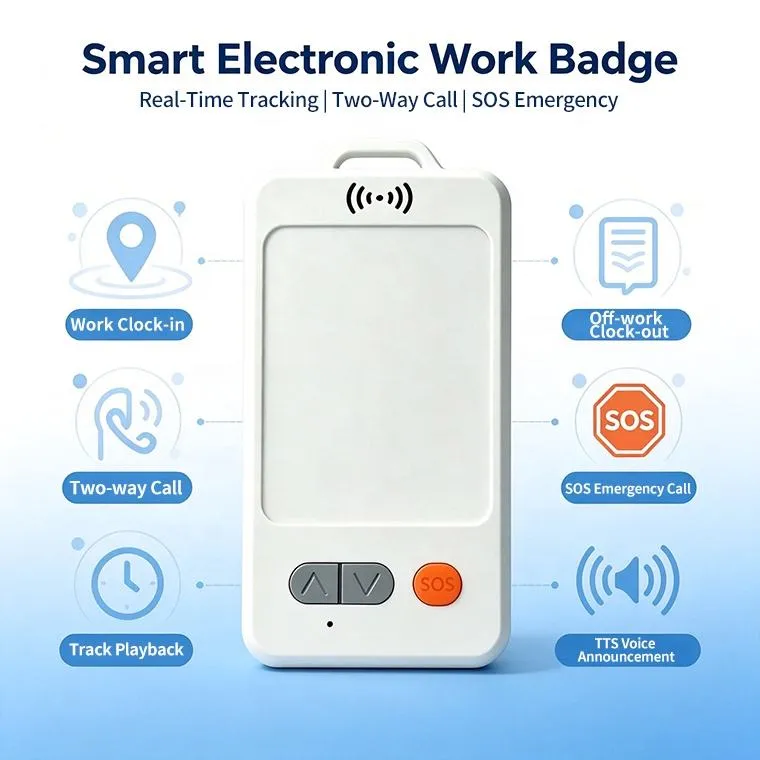
The JSC-802 is a wearable 4G employee badge that gives control centers live workforce visibility, rapid SOS notification, location history, and zone-based safety monitoring for industrial and field operations.
Final pricing depends on configuration, quantity, taxes and shipping.
Sample availability, quantity and lead time depend on the selected model. Confirm the pilot scope before placing a production order.
The JSC-802 transforms a conventional employee badge into a connected personnel-monitoring terminal. It links the identity of an employee or contractor with location, device status, alarm information, and time-stamped movement records.
Designed for industrial facilities and field operations, the badge helps managers answer three essential questions: who needs help, where the person was last detected, and which response team should be dispatched.
Authorized managers can view active employees and their latest reported positions from a central dashboard. Personnel can be organized by company, department, project, work team, or operating site.
The system can display the employee name, badge number, department, positioning time, communication status, remaining power, and current work zone. This structure is suitable for organizations managing permanent employees and temporary contractors at the same location.
GPS and BeiDou provide satellite positioning in open outdoor environments. Wi-Fi and cellular base-station information can supplement location results inside buildings or in areas where satellite reception is limited.
Wi-Fi positioning is not the same as centimeter-level indoor positioning. Projects requiring room-level, sub-meter, or centimeter accuracy should be evaluated separately and may require Bluetooth AoA, UWB, beacons, or additional positioning infrastructure.
When an employee presses the SOS button, the badge sends an emergency event to the management system through the 4G network. The control center can immediately view the employee identity, alarm time, latest reported position, and associated project information.
A practical response workflow can include:
This provides a traceable emergency-management process instead of relying only on telephone calls or manual reporting.
Different virtual areas can be created for different operational rules. Examples include high-voltage rooms, chemical storage areas, equipment operating zones, underground passages, loading areas, and emergency assembly points.
The platform can create an event when personnel enter a prohibited zone, leave an assigned workplace, or remain in a controlled area longer than expected. Alarm rules can be configured according to job role, time period, or project requirements.
Location reports form a time-stamped personnel movement timeline. Supervisors can use these records to review patrol completion, confirm arrival at a work area, investigate safety incidents, and analyze emergency evacuation activity.
Tracking intervals should be selected according to actual management requirements. Frequent reporting improves movement visibility but increases power consumption and cellular data usage.
The platform monitors badge connectivity and remaining battery power. Low-power and offline notifications allow supervisors to identify badges that require charging, have lost network access, or have not reported within the expected period.
A badge charging and handover procedure can be established for shift-based workplaces to improve device availability.
One platform can manage personnel across factories, warehouses, construction projects, farms, mines, and regional service locations. Account permissions can be separated by customer, project, department, or management role.
Head-office users can review multiple sites, while local supervisors see only the personnel and alarms assigned to their own project.
The JSC-802 can be connected to a customer’s business system through an API or customized communication protocol. Personnel identity, location events, alarm records, device status, and historical data can be exchanged with third-party applications.
Integration options include workforce management systems, access control, attendance platforms, security centers, emergency command systems, and customer-owned servers.
Shenzhen Jinshengchang Technology Co., Ltd. provides customized development for personnel-tracking projects. Services can include customer branding, firmware modification, server protocol integration, private deployment, branded mobile applications, multilingual platforms, customized packaging, and technical support.
The JSC-802 is suitable for businesses seeking a scalable employee safety solution that combines wearable identification, location awareness, emergency alarms, and centralized personnel supervision.
Reference configurations are shown below. Final specifications are confirmed in the approved product specification.
| Model | JSC-802 |
|---|---|
| Device Category | Wearable Employee Tracking Badge |
| Cellular Communication | 4G LTE |
| Satellite Positioning | GPS / BeiDou |
| Assisted Positioning | Wi-Fi / LBS |
| Emergency Key | Dedicated SOS Button |
| Personnel Identification | Device-to-Employee Binding |
| Location Display | Current Position and Last Known Position |
| Zone Management | Authorized / Restricted / Hazardous Areas |
| Location Records | Time-Stamped Movement History |
| Alert Types | SOS / Zone Violation / Low Power / Offline |
| Reporting Strategy | Time-Based and Configurable Uploading |
| Power Management | Rechargeable Battery with Low-Power Mode |
| User Interfaces | Browser Dashboard / Android App / iOS App |
| System Connection | API / Customer Platform / Private Server |
| Configuration | Remote Parameter Management |
| Wearing Options | Neck Lanyard / Badge Holder / Clip |
| Customization Services | Branding / Firmware / Protocol / Software / Packaging |
Confirm local 4G coverage and select the correct cellular frequency version
Prepare and activate the SIM card required by the project
Assign a unique badge ID to each employee or contractor
Import personnel names, departments, roles, and emergency contacts
Define workplaces, assembly points, restricted zones, and hazardous areas
Configure normal, active, and emergency reporting intervals
Set SOS, offline, low-power, and zone-violation notification rules
Install Wi-Fi reference points if assisted indoor positioning is required
Issue each badge to its assigned employee and record the handover
Test the SOS workflow from the badge to the control center
Verify outdoor positioning, indoor location results, and route records
Train supervisors to process alarms and maintain charging schedules
Define the application, country, quantity, reporting interval and target battery life.
Agree the device, network, power system, payload and platform interfaces.
Test representative devices, coverage, power consumption and alarm delivery on site.
Approve the specification and pilot results, then plan production, installation and support.
PCB, enclosure, connectors, antenna and power design are reviewed against the installation and operating requirements.
Reporting intervals, event logic, payload encoding and remote configuration are defined in a versioned interface document.
Device registration, maps, history, alarms and customer APIs are scoped together with access permissions and data handling.
Logo, enclosure color, labels, packaging and white-label interfaces can be assessed for the selected product and order quantity.
Sample availability, quantity and lead time depend on the selected model. Confirm the pilot scope before placing a production order.
Logo, packaging, firmware, payloads and API integration can be assessed within the agreed OEM / ODM scope.
Reporting interval, installation, radio conditions and temperature affect results. Confirm the operating profile and validate it during the pilot.
Share the country, device quantity, application, network, power target and platform requirements. Include drawings or interface documents when available.
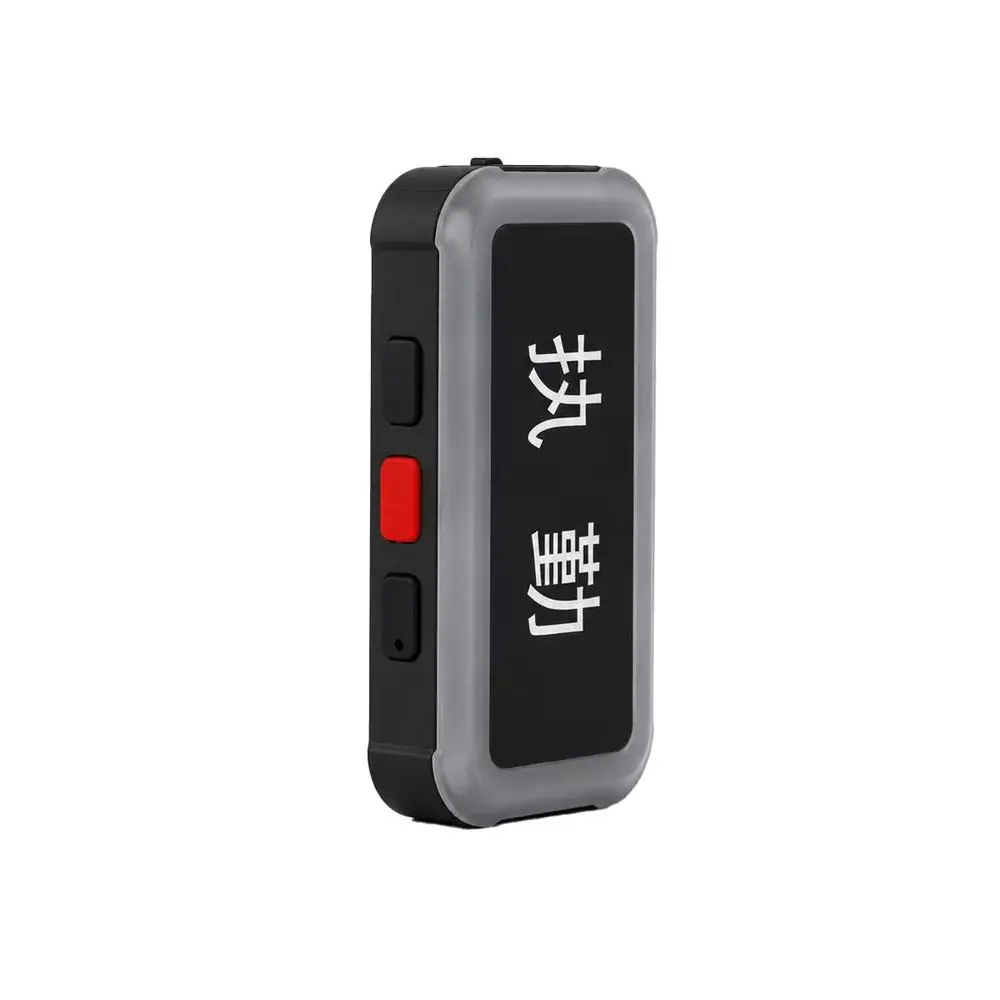
The GPS Shoulder Light Tracker is a compact wearable safety and positioning device for patrol officers, security guards, road workers and field personnel. It combines GPS, BeiDou, WiFi and LBS positioning with 4G Cat.1 communication, BLE 5.1 and a high-visibility LED matrix display. Managers can monitor personnel locations, online status and movement history through a web platform or mobile application.

The GPS Shoulder Warning Light combines high-visibility LED warning, real-time personnel tracking and emergency communication in one compact wearable device. It supports GPS positioning, 4G connectivity, SOS alarms, electronic geofencing and historical route playback, making it suitable for security patrols, traffic control, construction sites, railway maintenance and lone-worker protection.
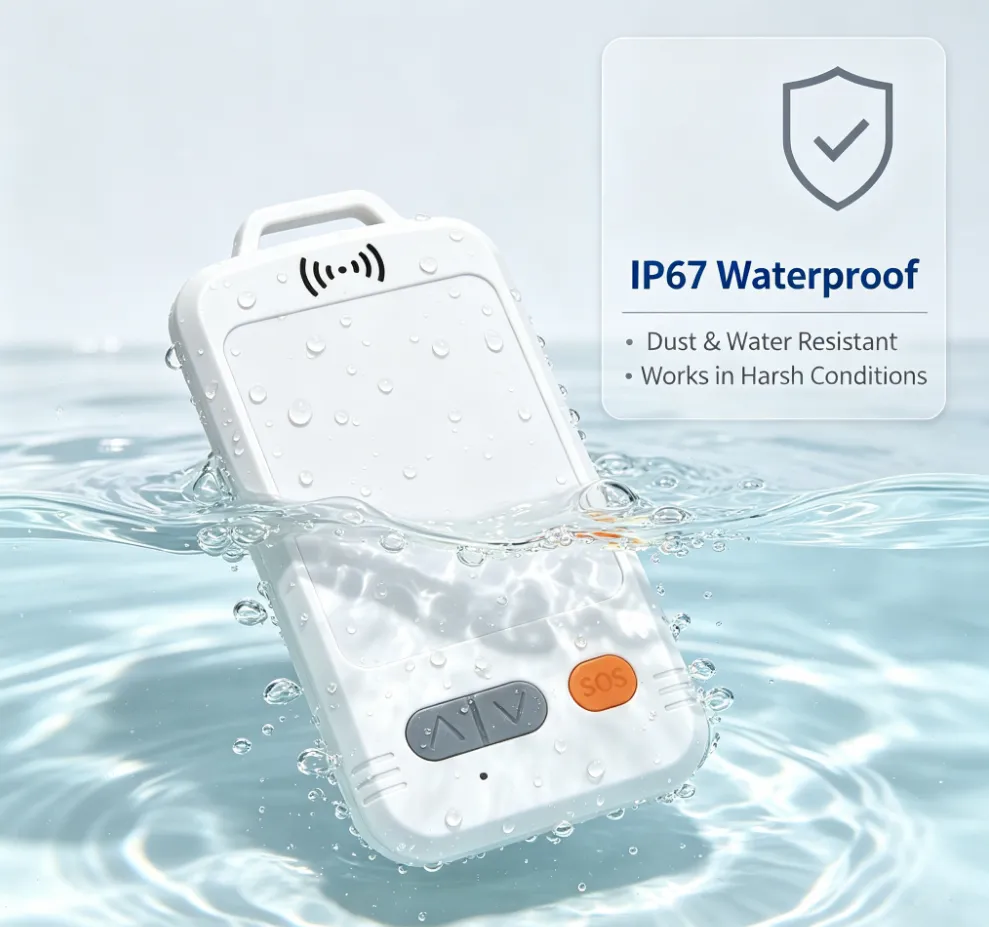
The JSC-802 is a wearable 4G GPS personnel badge designed for employee tracking, lone-worker protection, emergency response, and workforce safety management. It supports real-time positioning, SOS alerts, geofencing, historical route playback, and remote monitoring through mobile and web platforms.