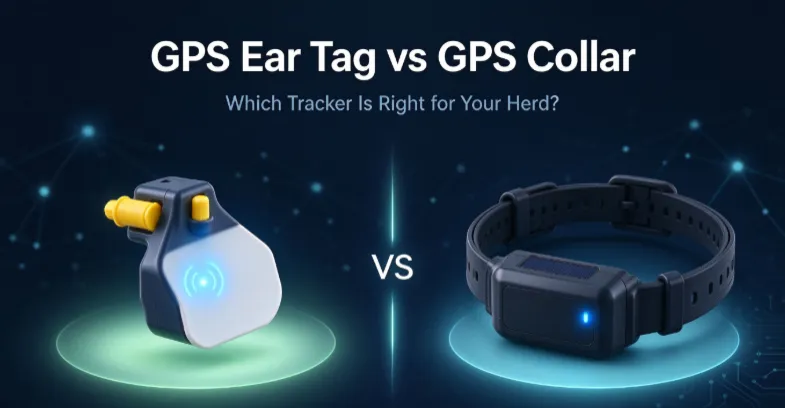
GPS Ear Tag vs GPS Collar: Which Livestock Tracker Is Right for Your Herd?
Meta description: GPS ear tag vs GPS collar — compare weight, battery life, accuracy, retention, data features, and cost to pick the right livestock tracker for your herd.
If you're shopping for livestock tracking this year, you've probably hit the same fork in the road: a GPS ear tag or a GPS collar? Both tell you where your animals are. But they're engineered for very different jobs — and picking the wrong form factor is how ranchers end up with tags torn out in the brush, or collars that go flat halfway through the grazing season.
This guide compares the two across the dimensions that actually decide the purchase: placement, weight, battery life, connectivity, accuracy, data features, retention risk, and cost. By the end you'll know exactly which one fits your operation.
Quick answer
- Choose a GPS ear tag if you run sheep, goats, or calves, want the lightest possible device, need per-animal data such as body temperature and activity, and handle your animals regularly.
- Choose a GPS collar if you run cattle or large stock on extensive grazing, need maximum battery life and fewer service trips, or you're tracking animals you can't easily put your hands on.
- Running a mixed operation? Many producers deploy both — collars on a sample of mature cows for landscape-level tracking, tags on the full herd for individual monitoring.
What is a GPS ear tag?
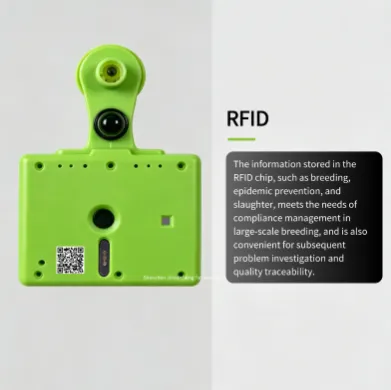
A GPS ear tag is a tracking device built into an ear tag that attaches through the animal's ear with a standard stud-and-button applicator. Modern units pack a GNSS receiver (GPS, and often BeiDou or Galileo), a cellular or LoRaWAN radio, motion sensors, and sometimes a temperature sensor into a housing that weighs roughly 20–60 grams [3][4].
Because they sit on the ear, they're the natural fit for smaller stock — sheep, goats, and calves — where a collar is either too heavy or simply slides off. Ear tags are also the only form factor that doubles as an official animal ID in many jurisdictions, which means one device can serve traceability and tracking at once.
What is a GPS collar?
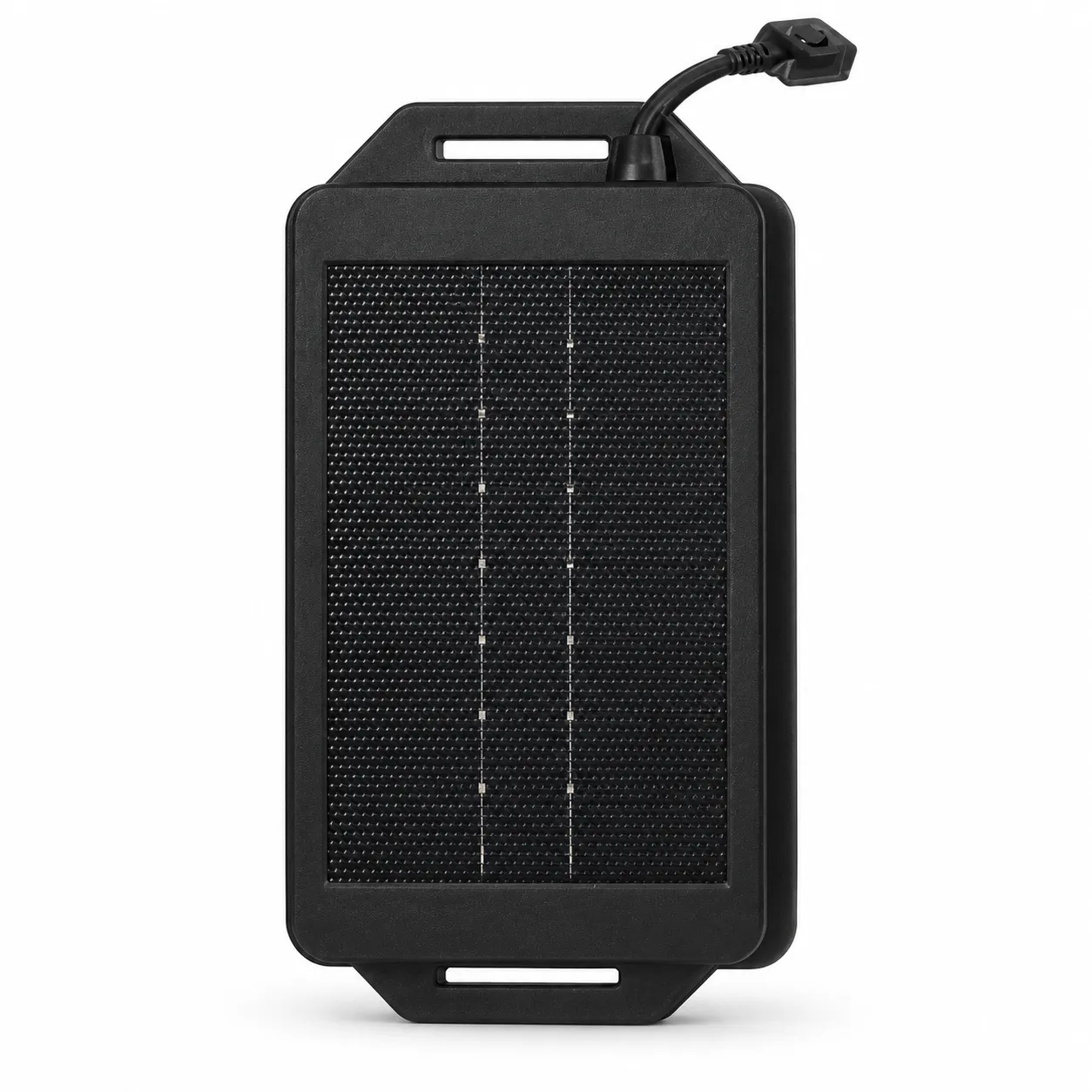
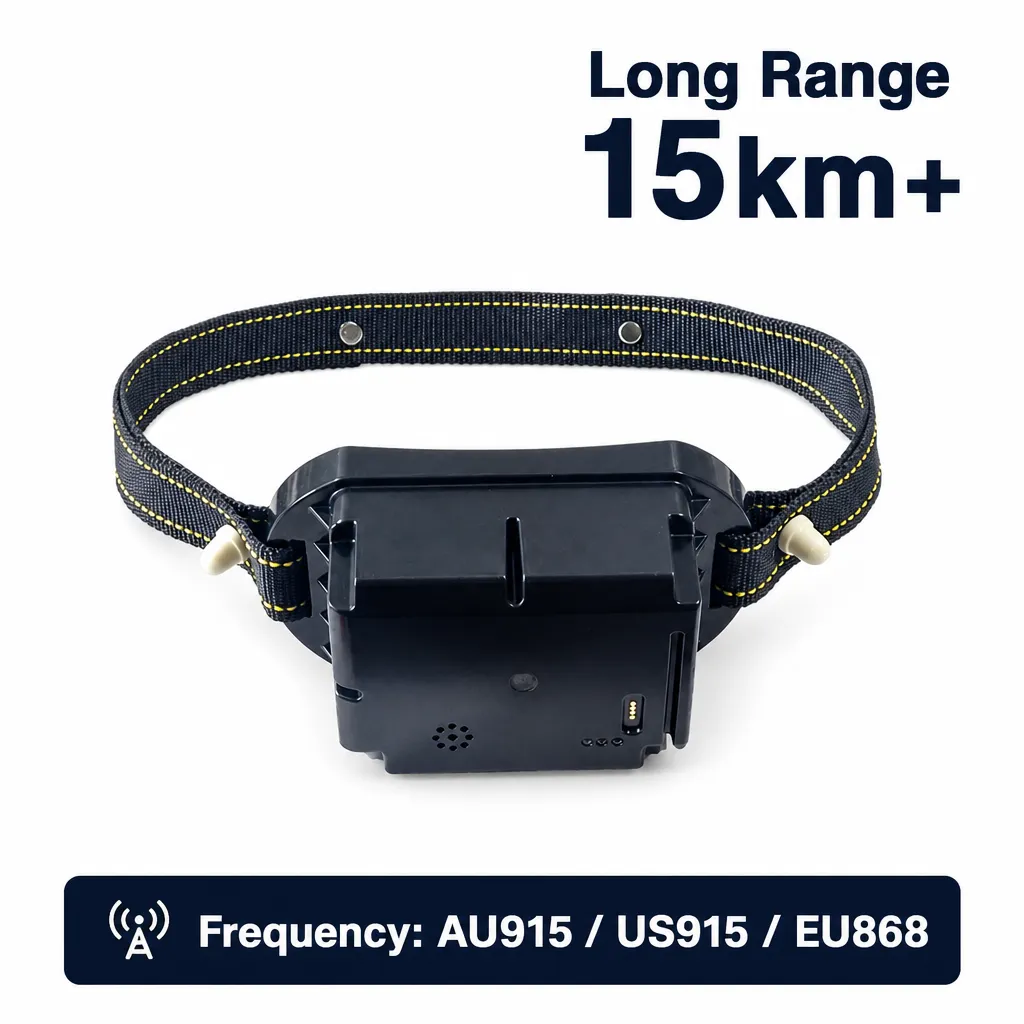
A GPS collar wraps around the animal's neck on an adjustable strap. The larger housing allows a much bigger battery — cattle collars commonly run 15,000–20,000 mAh with solar assist, with vendor-quoted field life measured in years rather than months.
Collars have been the default tool in animal movement research for decades, precisely because they can carry the battery and antenna needed for high-frequency fixes over long deployments. They're the standard for extensive cattle operations, wildlife studies, and any application that needs reliable location data across thousands of hectares.
Head-to-head comparison
1. Placement and animal comfort
Ear tags require piercing the ear — routine husbandry practice, but it means the ear must be healthy and the animal must be restrained at installation. Collars go on without piercing, which makes them easier to fit on animals that are hard to handle.
The trade-off runs both ways. A collar sits on a high-motion, high-contact part of the body and can catch on fences or brush; an ear tag is out of the way but vulnerable to ear damage and tearing.
2. Weight
This is the single biggest differentiator for small stock. Solar-powered GPS ear tags on the market now come in under 30 grams, which keeps them viable on sheep and goats. Cattle collars, by contrast, typically run from a few hundred grams up to around a kilogram once the battery and solar panel are included.
Rule of thumb: the smaller the animal, the stronger the case for an ear tag.
3. Battery life and power
Collars win on raw endurance because they can carry a bigger cell. Vendor specs illustrate the gap clearly — one comparison of two Chinese-market devices lists a 1,500 mAh ear tag rated for about 1 year versus a 3,000 mAh collar rated for about 2 years under lab conditions. Other collar products pair a 15,000–20,000 mAh battery with a solar panel for multi-year deployments .
Battery life isn't a fixed number, though — it's a function of how often you want a location fix. Halving the reporting frequency can roughly double field life on either form factor.
4. Connectivity
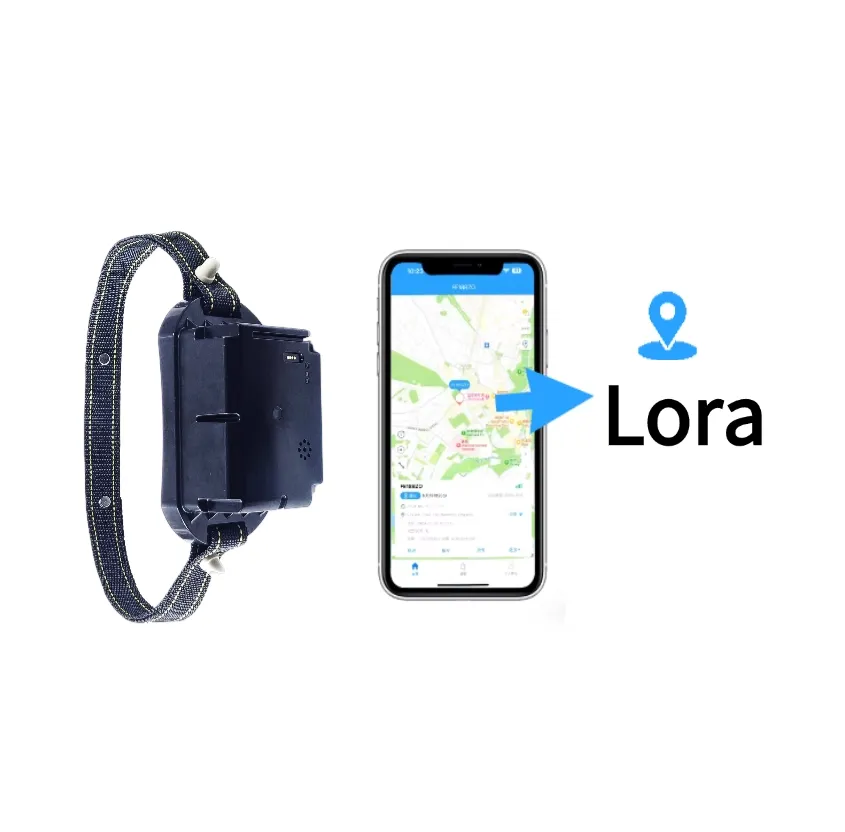
Both form factors now support the same menu of options: 4G cellular, LoRaWAN, and direct-to-satellite. Cellular suits areas with coverage; LoRaWAN suits properties where you can install a base station (one gateway can cover animals within roughly a 5 km radius) ; satellite-based tags need no network infrastructure at all and are the answer for genuinely remote country.
The practical difference is energy. A collar can afford to push data over cellular more often; an ear tag usually needs a low-power protocol or a satellite link to stay alive.
5. Location accuracy
Both use the same GNSS constellations, and both typically deliver around 10 metres of accuracy in open sky . The ear position can mean a slightly different view of the sky than the neck, but in practice accuracy differences between the two form factors are small compared with the effect of terrain, tree cover, and reporting frequency.
6. Data beyond location
Ear tags have an edge here. Because they sit against the ear, they're well placed for body temperature measurement, and many models also capture activity and rumination — one sensor vendor quotes temperature, activity, and rumination capture at just 28 grams with a 5-year battery. Collars can log activity and behaviour too, and are the usual platform for virtual fencing, which needs a speaker or stimulus module that an ear tag can't carry.
7. Retention and risk of loss
Every form factor has a failure mode:
- Ear tags can be lost through ear tearing, snagging on fences, or being rubbed out. A tag that falls off is usually gone for good.
- Collars can snag on vegetation or fencing, and a poorly fitted strap can chafe or work loose. But a collar that comes off tends to stay findable, and it can be re-fitted.
For herds where animals are handled often, ear-tag loss gets noticed and corrected. In extensive operations with infrequent handling, that's a real argument for collars.
8. Installation and handling
Ear tags need restraint and an applicator, but installation is seconds per head once you're set up — which makes them practical at herd scale. Collars take longer per animal and require a proper fit check, so they're usually deployed on a subset of the herd rather than every head.
9. Cost
Ear tags generally carry a lower unit price because they contain less battery and hardware. Collar pricing scales with battery capacity and ruggedisation — one solar cattle collar is listed from US$89 per unit, with configuration and order quantity affecting the final price. For a 500-head operation, that gap decides whether you instrument the whole herd or just a sample.
10. Scalability
Because they're cheap and light, ear tags scale to full-herd coverage, which is what you need for individual traceability, health monitoring, and per-animal alerts. Collars scale in cost and handling time, so they're typically reserved for high-value animals or for representative sampling of a mob.
Comparison table
| Feature | GPS Ear Tag | GPS Collar |
|---|---|---|
| Placement | Through the ear (piercing) | Around the neck, adjustable strap |
| Typical weight | ~20–60 g | Several hundred grams to ~1 kg |
| Battery | ~1,500–3,000 mAh, solar assist; ~1–5 years depending on fix rate | ~15,000–20,000 mAh, solar assist; up to ~3 years |
| Best suited to | Sheep, goats, calves, feedlot, full-herd ID | Cattle, large stock, extensive grazing, wildlife |
| Location accuracy | ~10 m in open sky | ~10 m in open sky |
| Extra sensors | Body temperature, activity, rumination | Activity, behaviour; virtual-fencing module |
| Retention risk | Ear tear-out, snagging | Strap snag, poor fit |
| Installation | Restraint + applicator, seconds per head | Longer per animal, fit check needed |
| Relative cost | Lower per unit | Higher per unit |
| Connectivity | 4G / LoRaWAN / satellite | 4G / LoRaWAN / satellite |
| Virtual fencing | Not supported | Supported |
Which one should you choose?
Pick a GPS ear tag when:
- You run sheep, goats, or young stock where collar weight is a welfare issue
- You need individual-level data — temperature, activity, rumination — across the whole herd
- Your animals are handled regularly, so lost tags get caught
- You want official identification and tracking in one device
- Budget per head is the constraint
Pick a GPS collar when:
- You run cattle or large stock on extensive grazing
- You want the longest possible service interval between battery changes
- You need virtual fencing or containment
- Your animals are hard to handle or rarely yarded
- You need reliable tracking over very large areas, or you're doing movement research
Can you use both together?
Yes — and many operations do. A common pattern is collars on a sample of cows to map grazing distribution and water use across the property, plus ear tags on the full herd for individual health, traceability, and theft alerts. The two streams feed the same dashboard, so you get landscape-level insight without paying collar prices on every head.
If you're starting from zero, the cheapest way to find out which suits you is a pilot: tag 20–30 animals or collar 5–10, run them through a full season, and compare data quality against your actual handling routine.
FAQ
Is a GPS ear tag as accurate as a GPS collar?
In open conditions, yes — both rely on the same GNSS constellations and typically deliver around 10 metres of accuracy. Differences come mainly from terrain, canopy cover, and how often each device reports, not from the form factor itself.
Do GPS ear tags hurt the animal?
Ear tagging is standard livestock practice, and modern tags are designed to stay under about 60 grams so the ear isn't loaded unnecessarily. Welfare depends more on correct application technique and tag weight than on the concept itself.
Which has longer battery life — an ear tag or a collar?
Collars, generally. A collar can carry a 15,000–20,000 mAh battery with solar assist, while ear tags typically run 1,500–3,000 mAh. But reporting frequency matters more than capacity: a tag set to report twice a day can outlast a collar set to report hourly.
Can I use a GPS collar on sheep or goats?
It's possible with a lightweight collar, but weight becomes a welfare and retention concern on small stock. Ear tags are usually the better choice for sheep and goats.
Do these devices work without cellular coverage?
Yes. LoRaWAN needs a base station on the property but no cellular signal, and satellite-based tags need neither — they upload directly to the cloud, which is why they're popular in remote grazing country.
How much does a livestock GPS tracker cost?
Ear tags are generally the cheaper option per unit. Collar pricing depends heavily on battery capacity and ruggedisation — a solar cattle collar can start around US$89 per unit, with configuration and volume affecting the final price.
Which is better for virtual fencing?
Collars. Virtual fencing requires an on-animal module that can deliver an audio cue or stimulus, and that hardware doesn't fit in an ear tag.
Final takeaway
There's no universally better device — only a better fit for your animals, your terrain, and your handling routine. Ear tags win on weight, per-head cost, and per-animal data. Collars win on battery life, retention in extensive country, and virtual fencing.
Match the form factor to the animal and the job, and you'll spend less on hardware and get data you'll actually use.