Hardware & PCB design
PCB, enclosure, connectors, antenna and power design are reviewed against the installation and operating requirements.

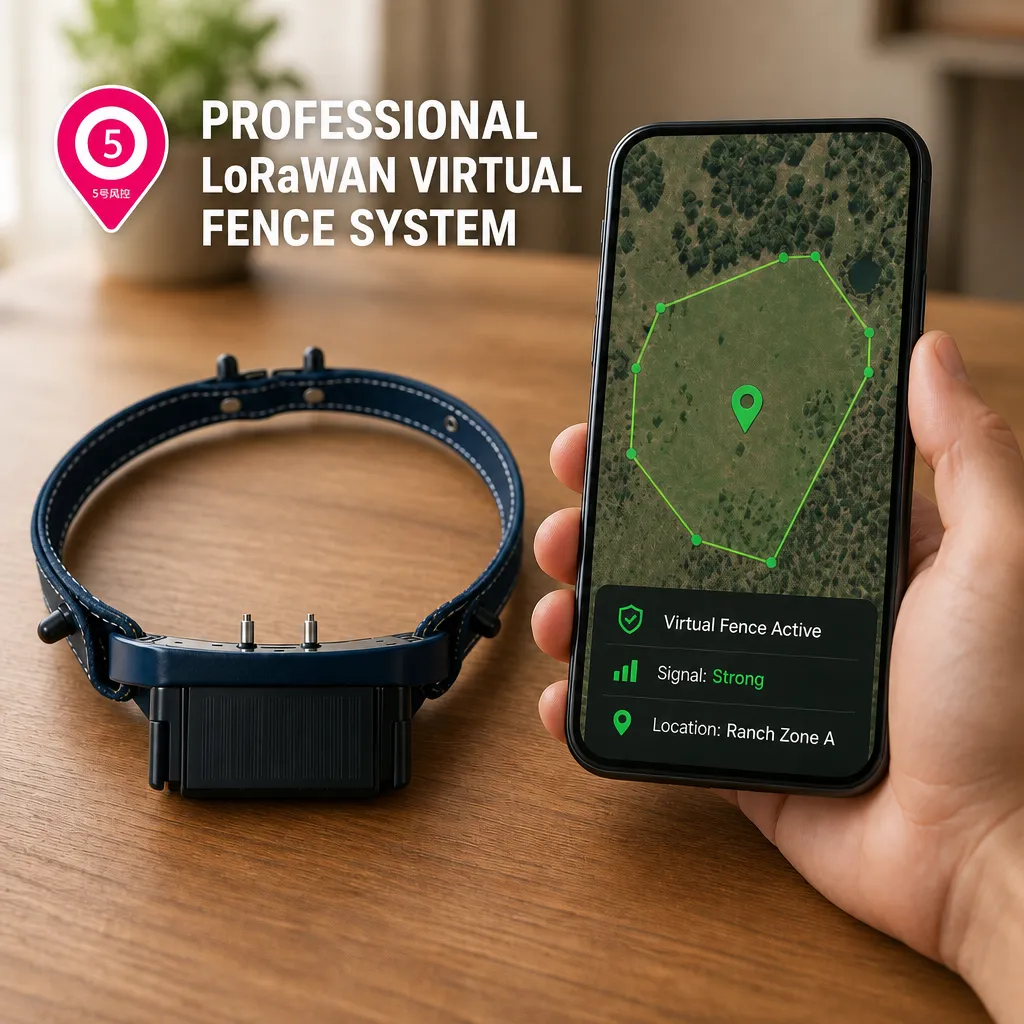
A LoRaWAN cattle containment collar combining GPS positioning, audio warnings and controlled electric pulse guidance. It enables ranchers to define virtual grazing boundaries, monitor cattle locations and manage herd movement remotely through a mobile app or web platform.
Final pricing depends on configuration, quantity, taxes and shipping.
Sample availability, quantity and lead time depend on the selected model. Confirm the pilot scope before placing a production order.
The LoRaWAN Cattle Containment Collar is a smart livestock-management device designed for virtual pasture control, cattle location monitoring and rotational grazing. It combines GPS and BeiDou positioning with long-range LoRaWAN communication, audio warnings and controlled electric pulse guidance.
Ranchers can draw virtual grazing boundaries through a mobile app or web platform without installing a complete physical fence. When cattle approach a configured boundary, the collar first provides an audio warning. If the animal continues moving beyond the boundary, an authorized controlled electric pulse can be activated according to the configured guidance sequence.
The system allows ranch managers to monitor animal locations, review historical movement, receive alerts and remotely update grazing areas.
Traditional fencing requires posts, wire, labor and continuous maintenance. It can also be difficult to move when pasture allocation changes.
The LoRaWAN cattle containment collar allows ranchers to create and update digital boundaries on a map. Grazing areas can be adjusted remotely according to grass availability, water access, animal groups and seasonal pasture plans.
Physical perimeter fencing may still be required depending on local regulations, animal welfare requirements, road conditions and ranch risk levels. The virtual containment system is designed to improve flexible grazing management rather than automatically replace every physical safety barrier.
The collar uses a progressive guidance process. When an animal approaches a virtual boundary, the system first generates an audio cue. This gives the animal an opportunity to stop or change direction before any pulse is delivered.
If the animal continues crossing the configured boundary, the collar can provide a controlled electric pulse under authorized settings. The intensity, duration, trigger logic and safety limits should be configured according to the product specification, local regulations and professional animal-welfare guidance.
The system should not use continuous or uncontrolled stimulation. Initial animal training and gradual familiarization are essential for effective operation.
The collar supports GPS and BeiDou satellite positioning to determine the location of each animal. Position data is transmitted to the ranch management platform through the LoRaWAN network.
Users can view the latest cattle position, positioning time, movement status, device status and battery level. Reporting intervals can be adjusted according to the required tracking frequency and battery-life target.
LoRaWAN is suitable for large ranches because it provides long-range, low-power communication without requiring a SIM card in every collar. Each collar communicates with one or more LoRaWAN gateways installed across the grazing area.
Under open, line-of-sight conditions, a gateway may provide coverage of up to approximately 15 kilometres. Actual range depends on terrain, antenna height, vegetation, buildings, weather, gateway configuration and radio-frequency regulations.
Additional gateways can be deployed to improve coverage in valleys, mountains, forests or other areas with signal obstruction.
The complete system consists of cattle collars, LoRaWAN gateways, gateway antennas, network connectivity, a server platform and mobile applications.
The collar sends positioning and status data to the LoRaWAN gateway. The gateway forwards the data to the server through 4G LTE or Ethernet. The server processes the information and displays it through the web platform and mobile app.
Remote commands can be sent from the platform through the gateway to the collars, allowing authorized users to update reporting settings, virtual boundaries and other supported parameters.
Ranchers can divide a large pasture into several digital grazing zones. Cattle can be moved between zones according to a planned schedule without rebuilding physical internal fences for every rotation.
This helps managers control grazing pressure, reduce overgrazing and allow previously used areas time to recover. Virtual boundaries can also be configured around crops, roads, dangerous terrain or restricted water sources.
The platform stores historical positioning records for authorized users. Ranch managers can review animal routes, stop locations, movement patterns and time spent in different grazing areas.
Movement history can help locate missing animals, investigate boundary events, review pasture utilization and identify unusual activity that may require manual inspection.
The collar provides management data but does not replace professional veterinary diagnosis.
The collar can collect movement and activity information using its integrated sensors. The platform may identify prolonged inactivity, unusual movement or unexpected location changes according to configured rules.
When an abnormal event occurs, the system can generate an alert for ranch personnel. Workers can then inspect the animal and determine whether it is resting, separated from the herd, trapped, injured or experiencing another issue.
The enclosure is designed for long-term outdoor livestock use. Its IP68 waterproof structure helps protect the internal electronics against rain, mud, dust and temporary water exposure.
The collar, strap, charging interface and enclosure should be inspected regularly for damage caused by animal movement, impact or long-term environmental exposure.
The collar uses a low-power communication architecture and intelligent sleep strategy to reduce energy consumption. Battery life depends on positioning frequency, LoRaWAN reporting interval, gateway signal strength, ambient temperature and guidance activity.
An optional solar-charging configuration can extend operating time in suitable outdoor environments. The solar panel should remain exposed to sunlight and should not be covered by the animal’s body, mud or vegetation.
The livestock management system supports Android and iOS applications as well as a browser-based web platform.
Available platform functions can include:
REAL-TIME CATTLE LOCATION
HERD AND ANIMAL MANAGEMENT
VIRTUAL BOUNDARY CONFIGURATION
HISTORICAL ROUTE PLAYBACK
BATTERY STATUS MONITORING
COLLAR ONLINE STATUS
GEO-FENCE ALERT RECORDS
REMOVAL AND TAMPER ALERTS
ACTIVITY INFORMATION
REMOTE PARAMETER CONFIGURATION
MULTIPLE RANCH MANAGEMENT
USER AND ROLE MANAGEMENT
The system can provide API integration for approved OEM projects. Positioning data, alarm records, device status and livestock information can be connected to an existing farm-management platform.
Private server deployment is available for customers requiring independent data management, local system integration or customized security policies.
The server architecture can be configured according to the number of collars, data-reporting frequency, storage requirements and expected system concurrency.
Different countries use different LoRaWAN frequency plans. Available options can include:
CN470 FOR CHINA
IN865 FOR INDIA
EU868 FOR EUROPE
RU864 FOR RUSSIA
US915 FOR THE UNITED STATES
AU915 FOR AUSTRALIA AND SELECTED LATIN AMERICAN MARKETS
KR920 FOR SOUTH KOREA
AS923 VARIANTS FOR MULTIPLE ASIAN MARKETS
The correct frequency must be confirmed before production and deployment. Customers should follow the applicable radio-frequency regulations in the destination country.
Cattle should be introduced to the system gradually in a controlled environment. Training usually begins with clear audio cues and visible supervision so that animals can learn how to respond to the warning.
Electric pulse guidance must be configured within approved safety limits and used only when necessary. Ranch operators are responsible for following local animal-welfare laws, veterinary recommendations and pasture-management regulations.
Young, sick, injured or otherwise unsuitable animals should not use pulse guidance without professional evaluation.
Shenzhen Jinshengchang Technology Co., Ltd. provides OEM and ODM development for LoRaWAN livestock collars and complete smart-ranch systems.
Customization services include:
CUSTOM PRODUCT LOGO
CUSTOM COLLAR STRAP
CUSTOM ENCLOSURE COLOR
BATTERY CAPACITY CUSTOMIZATION
SOLAR CHARGING OPTIONS
PCB AND ANTENNA DEVELOPMENT
FIRMWARE DEVELOPMENT
LORAWAN FREQUENCY CONFIGURATION
AUDIO GUIDANCE LOGIC
ELECTRIC PULSE CONTROL LOGIC
COMMUNICATION PROTOCOL INTEGRATION
ANDROID AND IOS APP CUSTOMIZATION
WEB PLATFORM CUSTOMIZATION
MULTILINGUAL SOFTWARE
API INTEGRATION
PRIVATE SERVER DEPLOYMENT
Our engineering team can support projects from requirement analysis and prototype development to ranch testing, gateway planning and mass production.
No. The LoRaWAN collar communicates directly with a LoRaWAN gateway and normally does not require an individual SIM card. The gateway may use a 4G SIM card for server backhaul.
Under open and elevated line-of-sight conditions, the coverage may reach approximately 15 kilometres. Hills, trees, buildings and antenna height can significantly affect the actual range.
Yes. Multiple gateways can be deployed across a large ranch to improve network coverage, redundancy and data reception.
Yes. Authorized users can update supported virtual boundary settings through the management platform and send the configuration to the collar through the LoRaWAN network.
No. The intended guidance sequence begins with an audio warning. A controlled pulse is used only if the animal continues beyond the configured boundary and the function has been authorized and enabled.
Yes. Solar-assisted charging can be provided as an optional configuration according to the collar structure and project requirements.
Yes. API and communication-protocol integration are available for qualified OEM projects.
Reference configurations are shown below. Final specifications are confirmed in the approved product specification.
| PRODUCT TYPE | LORAWAN CATTLE CONTAINMENT COLLAR |
|---|---|
| COMMUNICATION | LORA AND LORAWAN |
| POSITIONING | GPS AND BEIDOU |
| POSITIONING MODE | SATELLITE AND SCHEDULED POSITIONING |
| GUIDANCE MODE | AUDIO WARNING AND CONTROLLED ELECTRIC PULSE |
| VIRTUAL BOUNDARY | REMOTELY CONFIGURABLE |
| TRACKING MODE | REAL-TIME AND SCHEDULED REPORTING |
| ACTIVITY MONITORING | SUPPORTED |
| MOVEMENT HISTORY | SUPPORTED |
| GEO-FENCE ALERT | SUPPORTED |
| COLLAR REMOVAL ALERT | SUPPORTED |
| LOW-BATTERY ALERT | SUPPORTED |
| POWER MODE | LOW-POWER INTELLIGENT SLEEP |
| BATTERY | RECHARGEABLE LONG-LIFE BATTERY |
| SOLAR CHARGING | OPTIONAL |
| WATERPROOF RATING | IP68 |
| LORAWAN FREQUENCIES | CN470, IN865, EU868, RU864, US915, AU915, KR920 AND AS923 |
| NETWORK MODE | PRIVATE LORAWAN NETWORK |
| GATEWAY BACKHAUL | 4G LTE OR ETHERNET |
| OUTDOOR COMMUNICATION RANGE | UP TO 15 KM UNDER OPEN LINE-OF-SIGHT CONDITIONS |
| PLATFORM | ANDROID APP, IOS APP AND WEB PLATFORM |
| API INTEGRATION | SUPPORTED |
| PRIVATE SERVER DEPLOYMENT | SUPPORTED |
| REMOTE COMMANDS | SUPPORTED |
| FIRMWARE UPDATE | CONFIGURATION DEPENDENT |
| ENCLOSURE | RUGGED OUTDOOR HOUSING |
| SUITABLE ANIMALS | CATTLE AND OTHER LARGE LIVESTOCK |
| PLACE OF ORIGIN | SHENZHEN, GUANGDONG, CHINA |
| CUSTOMIZATION | LOGO, HARDWARE, FIRMWARE, PROTOCOL, APP AND PLATFORM |
SURVEY THE RANCH AND CONFIRM THE REQUIRED COVERAGE AREA
SELECT THE CORRECT LORAWAN FREQUENCY FOR THE COUNTRY
INSTALL THE LORAWAN GATEWAY AT AN ELEVATED LOCATION
KEEP THE GATEWAY ANTENNA CLEAR OF LARGE OBSTRUCTIONS
CONNECT THE GATEWAY TO 4G LTE OR ETHERNET BACKHAUL
ADD THE GATEWAY TO THE NETWORK SERVER
REGISTER EACH COLLAR USING ITS UNIQUE DEVICE ID
CONFIGURE THE COLLAR REPORTING AND SLEEP INTERVALS
FULLY CHARGE THE COLLAR BEFORE INSTALLATION
ADJUST THE STRAP TO FIT THE CATTLE SECURELY
CONFIRM THAT THE COLLAR DOES NOT RESTRICT BREATHING OR MOVEMENT
ADD CATTLE IDENTIFICATION INFORMATION TO THE PLATFORM
DRAW THE INITIAL VIRTUAL GRAZING BOUNDARY
CONFIGURE AUDIO WARNING PARAMETERS
CONFIGURE ELECTRIC PULSE PARAMETERS UNDER AUTHORIZED SETTINGS
TEST THE AUDIO WARNING BEFORE ENABLING PULSE GUIDANCE
TRAIN CATTLE GRADUALLY IN A SMALL CONTROLLED AREA
CHECK LORAWAN SIGNAL COVERAGE ACROSS THE PASTURE
MONITOR COLLAR BATTERY AND COMMUNICATION STATUS
REVIEW ALERTS AND MOVEMENT HISTORY REGULARLY
ADJUST THE VIRTUAL BOUNDARY ACCORDING TO THE GRAZING PLAN
Define the application, country, quantity, reporting interval and target battery life.
Agree the device, network, power system, payload and platform interfaces.
Test representative devices, coverage, power consumption and alarm delivery on site.
Approve the specification and pilot results, then plan production, installation and support.
PCB, enclosure, connectors, antenna and power design are reviewed against the installation and operating requirements.
Reporting intervals, event logic, payload encoding and remote configuration are defined in a versioned interface document.
Device registration, maps, history, alarms and customer APIs are scoped together with access permissions and data handling.
Logo, enclosure color, labels, packaging and white-label interfaces can be assessed for the selected product and order quantity.
Sample availability, quantity and lead time depend on the selected model. Confirm the pilot scope before placing a production order.
Logo, packaging, firmware, payloads and API integration can be assessed within the agreed OEM / ODM scope.
Reporting interval, installation, radio conditions and temperature affect results. Confirm the operating profile and validate it during the pilot.
Share the country, device quantity, application, network, power target and platform requirements. Include drawings or interface documents when available.
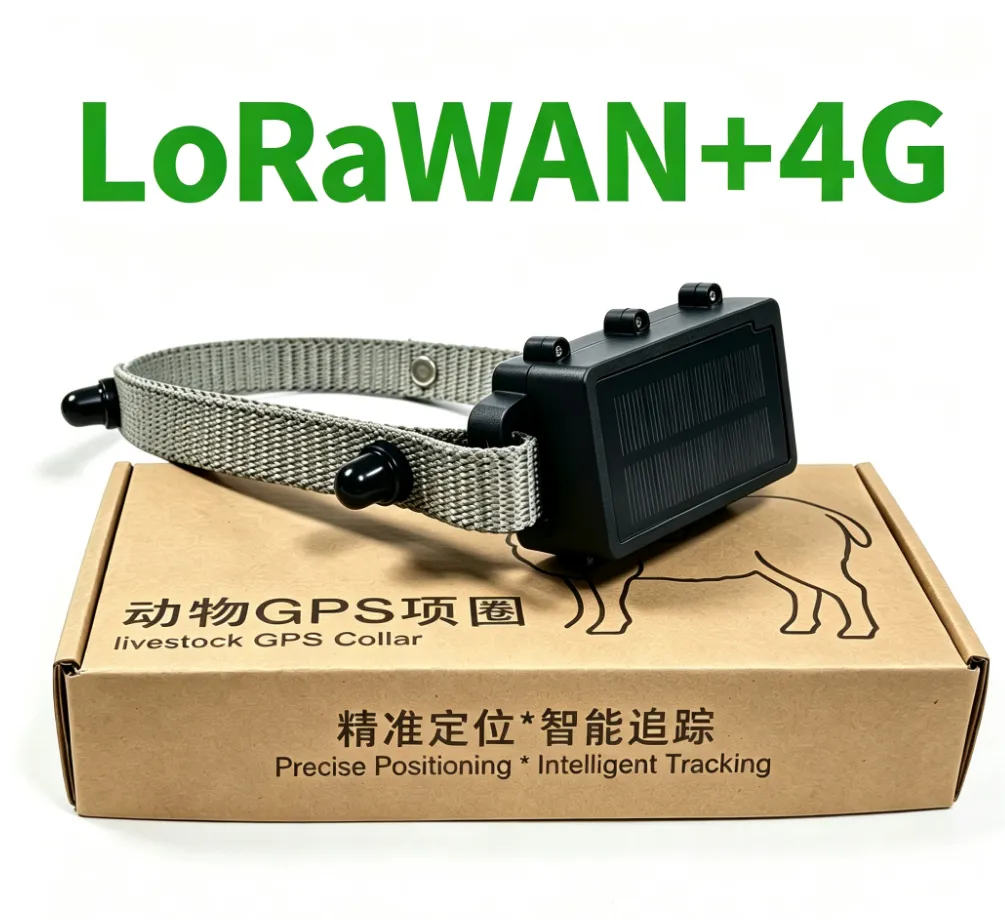
The Sheep GPS Tracking Collar is designed for real-time flock location, grazing-route monitoring and escape prevention. It supports GPS positioning, configurable location uploads, electronic geofences and historical route playback. Waterproof construction, low-power operation and optional LoRaWAN or 4G communication make it suitable for large farms, open pastures and remote grazing areas.
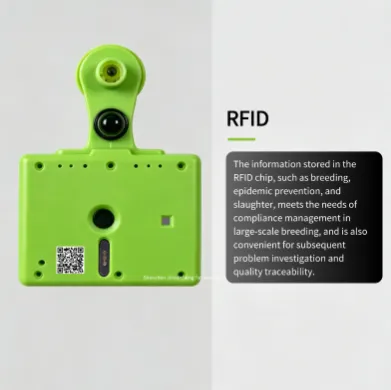
The Pasture Livestock Tracking Ear Tag is designed for cattle, sheep, and other grazing animals that require long-range location tracking and digital herd management. It combines GPS positioning, LoRaWAN communication, activity monitoring, temperature sensing, RFID identification, and geo-fence alerts in one compact livestock ear tag. The device is suitable for large farms, open pasture, remote grazing areas, and livestock IoT projects where farmers need to monitor animal location and movement from a web platform or mobile app. LoRaWAN communication can reduce the need for a cellular SIM card on each device, while optional 4G connectivity can be used for specific project requirements.
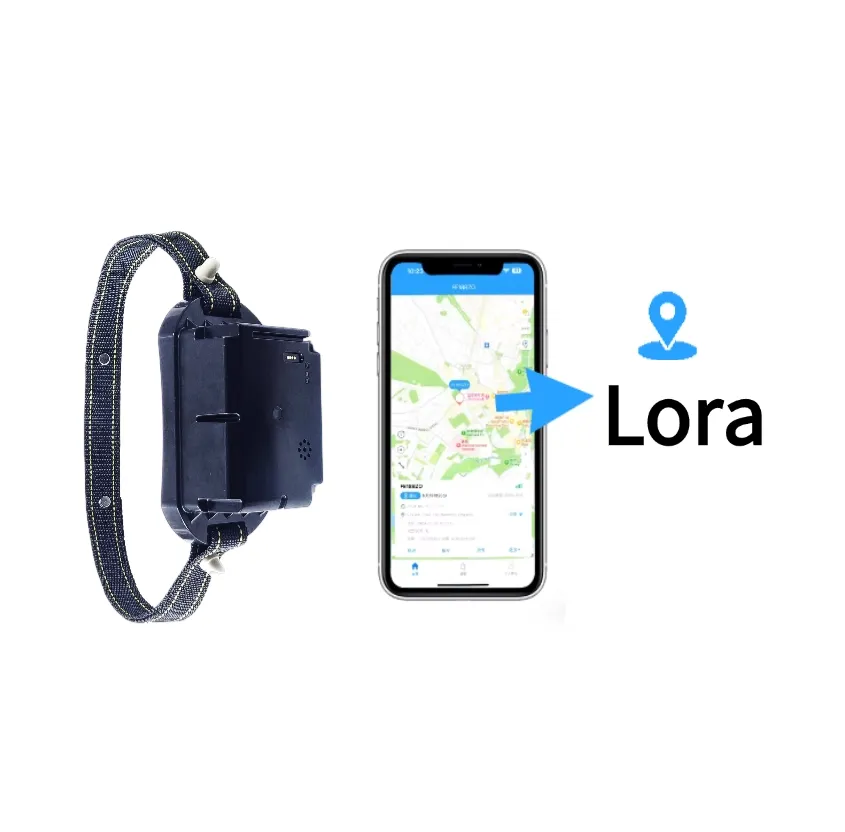
The JSC-805 is a rugged solar-powered 4G/2G GPS tracking collar for cattle, sheep, horses, and other large animals. It provides location monitoring, geofencing, route history, activity analysis, and livestock security through mobile apps and a web platform.