Introduction
With the rapid development of IoT, GPS tracking devices are widely used in fleet management, livestock monitoring, asset protection, personal safety, logistics, and smart transportation.
However, many companies do not simply need an off-the-shelf GPS tracker. They need a customized GPS tracking solution with their own hardware design, firmware functions, mobile APP, cloud platform integration, and brand identity.
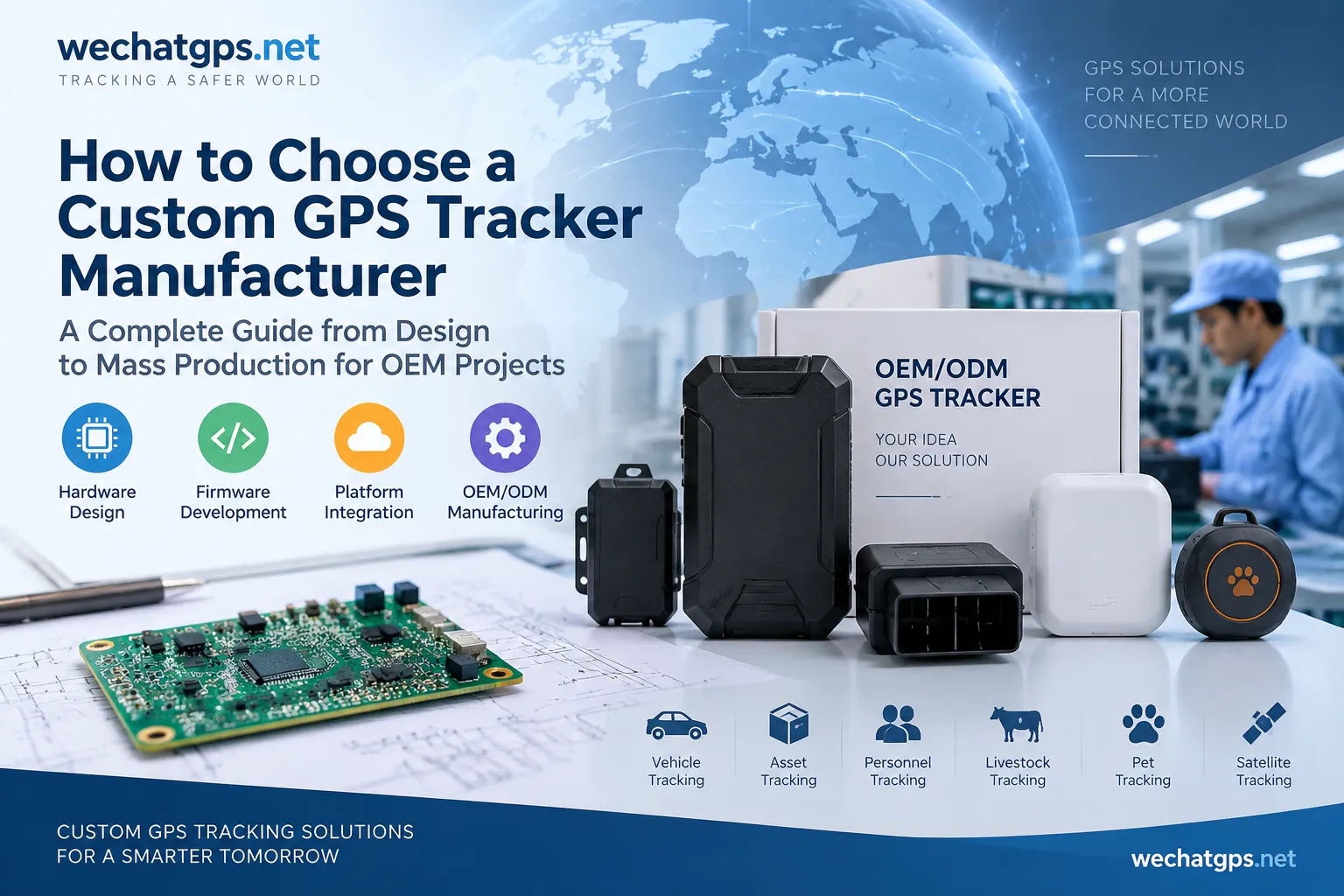
Choosing the right custom GPS tracker manufacturer is a key step for successful product development.
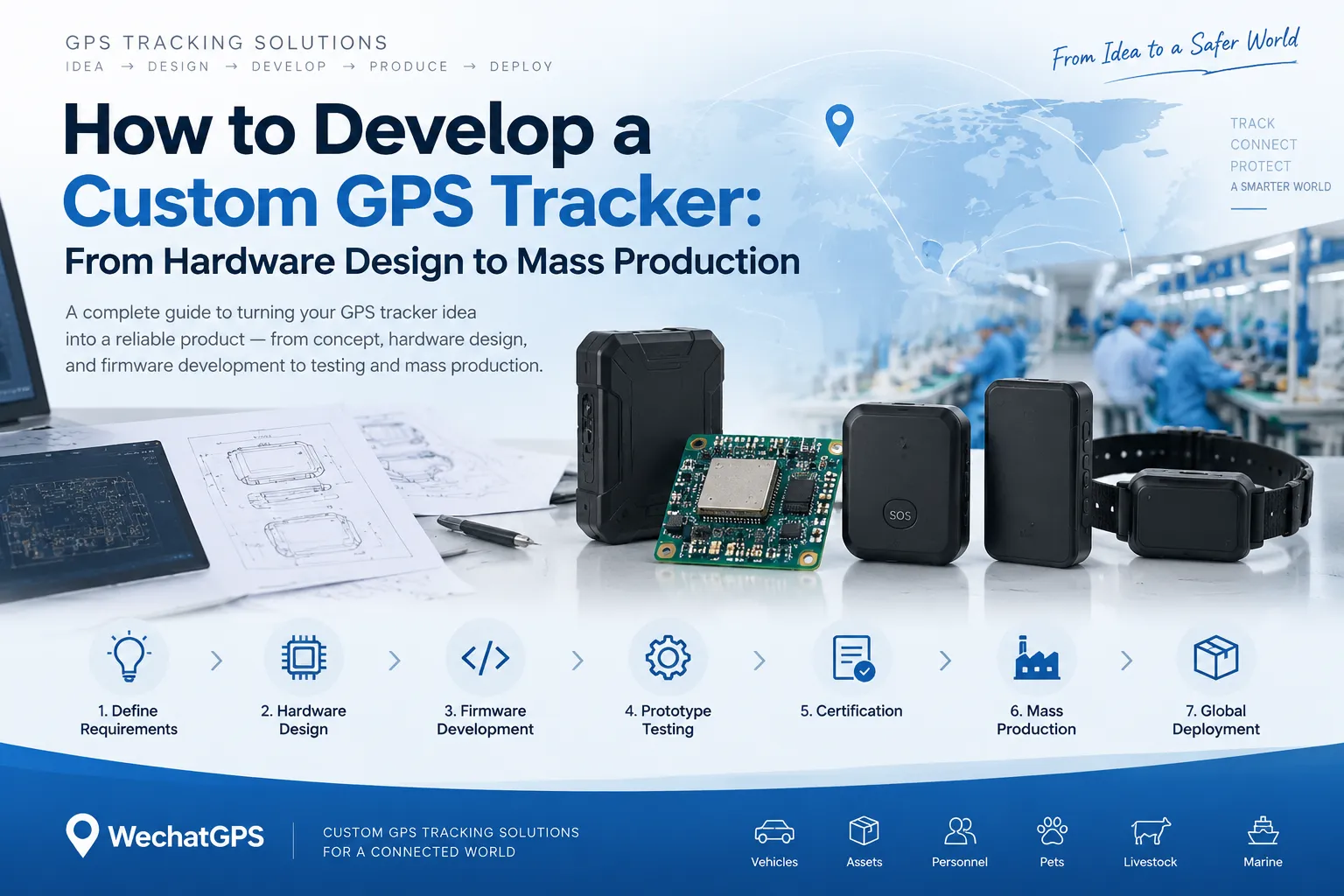
A professional GPS manufacturer should provide complete services from hardware design, prototype testing, firmware development, certification, and mass production.
1. Hardware Design Capability Is the Foundation
A reliable OEM GPS tracker manufacturer should have independent hardware development capability.
The customization process usually includes:
- GNSS module selection
- LTE/4G communication design
- LoRa or satellite communication integration
- PCB schematic design
- PCB layout optimization
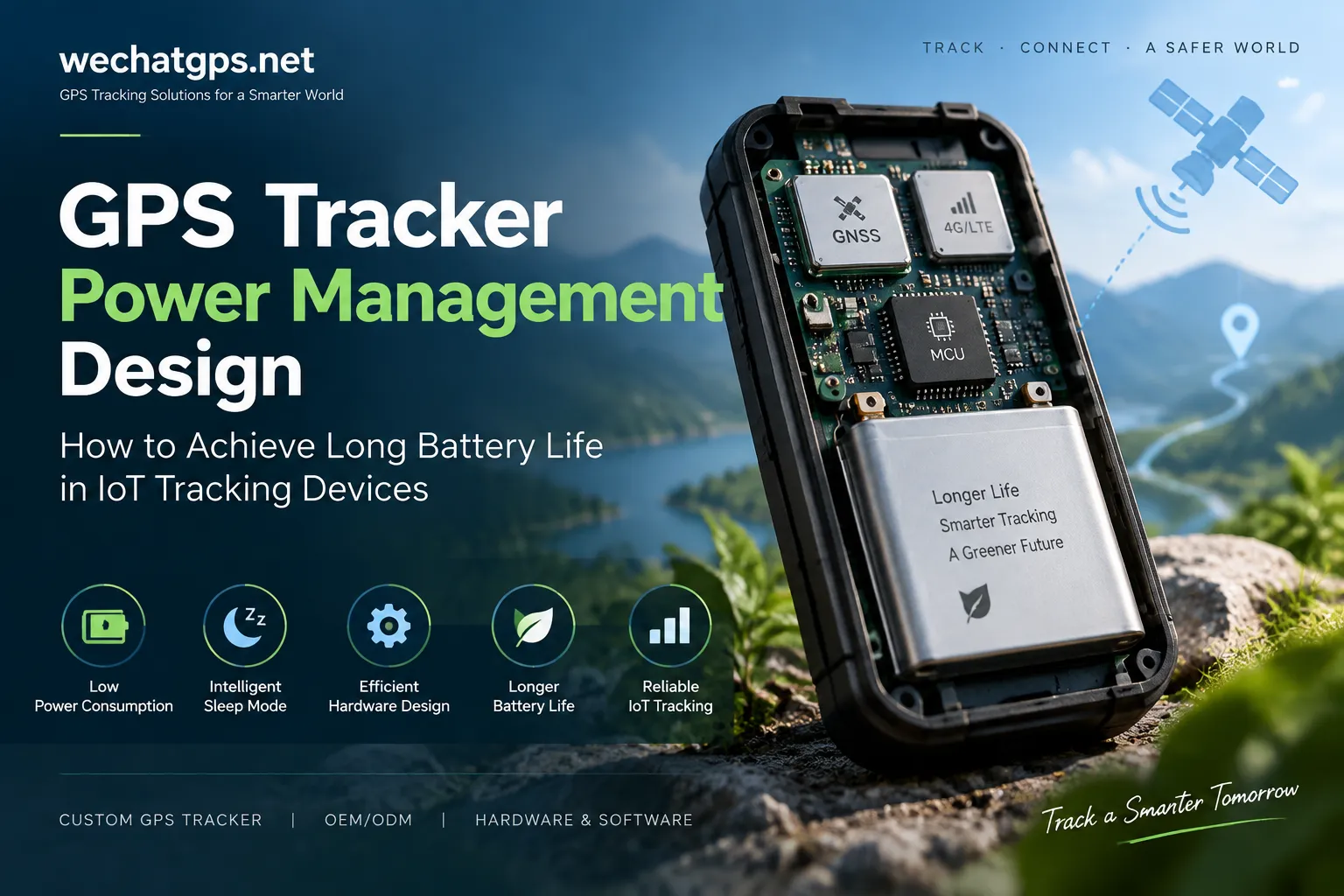
- Power management design
- Antenna tuning
- Waterproof housing design
Different applications require different hardware solutions.
For example:
Vehicle GPS Tracker
Usually requires:
- 12V/24V power supply
- ACC ignition detection
- Engine cut-off control
- Fuel monitoring
- CAN bus communication
Asset GPS Tracker
Requires:
- Long standby battery
- Magnetic installation
- IP67/IP68 waterproof design
- Low-power firmware
Livestock GPS Tracker
Requires:
- Lightweight structure
- Solar charging option
- Long battery life
- Animal-friendly installation
2. Firmware Development Determines Product Performance
A GPS tracker is not only hardware.
Firmware directly affects:
- Positioning accuracy
- Battery life
- Communication stability
- Data upload frequency
- Alarm response speed
Professional manufacturers should support customized firmware functions:
- Geo-fence alarm
- SOS emergency button
- Low battery warning
- Device removal alarm
- Vibration detection
- Temperature monitoring
- Remote configuration
- OTA firmware upgrade
For large projects, customized firmware can reduce power consumption and improve operational efficiency.
3. Communication Options for Different Applications
A good GPS tracking manufacturer should support multiple communication technologies.
4G GPS Tracker
Suitable for:
- Vehicle tracking
- Fleet management
- Personnel tracking
- Logistics
Advantages:
- Global cellular network
- Real-time tracking
- Fast data transmission
LoRa GPS Tracker
Suitable for:
- Farms
- Industrial areas
- Large private sites
Advantages:
- Ultra-low power consumption
- Long communication distance
- Lower operating cost
Satellite GPS Tracker
Suitable for:
- Ocean transportation
- Remote areas
- Desert operations
- No cellular coverage environments
Advantages:
- Communication without SIM card
- Global coverage
4. Complete Software Platform Integration
A professional OEM GPS supplier should provide more than hardware.
The complete solution includes:
Web Platform
Functions:
- Device management
- Real-time location
- Historical track playback
- User management
- Alarm management
- Data reports
Mobile APP
Support:
- Android
- iOS
- Multi-language interface
API Integration
Enterprise customers may require:
- Third-party platform connection
- ERP integration
- Fleet management software connection
- Private server deployment
5. Certification and Mass Production Ability
Before mass production, GPS devices normally require:
- CE certification
- FCC certification
- RoHS compliance
- Battery safety testing
An experienced GPS manufacturer should provide:
- Prototype samples
- Engineering testing
- Pilot production
- Quality inspection
- Stable supply chain
6. OEM and ODM Customization Process
A professional GPS tracker development process usually includes:
Step 1: Requirement Analysis
Confirm:
- Application scenario
- Communication network
- Battery requirement
- Functions
- Quantity
Step 2: Prototype Development
Includes:
- Hardware design
- Firmware programming
- Mechanical design
- Sample production
Step 3: Testing
Testing items:
- GPS accuracy
- Network stability
- Waterproof performance
- Battery endurance
- Environmental testing
Step 4: Mass Production
Includes:
- SMT production
- Assembly
- Quality inspection
- Packaging customization
Why Choose Shenzhen Jinshengchang Technology for Custom GPS Development?
Shenzhen Jinshengchang Technology provides OEM/ODM GPS tracking solutions for global customers.
Our capabilities include:
- Custom GPS tracker hardware design
- PCB development
- Firmware customization
- GPS platform integration
- 4G / LoRa / Satellite tracking solutions
- Small batch prototype production
- Large-scale manufacturing
Supported products:
- Custom Vehicle GPS Tracker
- Employee GPS Tracking Badge
- Livestock GPS Collar
- Asset GPS Tracker
- Pet GPS Tracker
- Satellite GNSS Tracker
Conclusion
Choosing a professional custom GPS tracker manufacturer can significantly reduce development risks and shorten time to market.
A complete GPS solution requires not only a tracking device but also hardware engineering, firmware development, cloud platform support, and manufacturing experience.
For companies looking for OEM GPS tracking solutions, working with an experienced manufacturer is the key to building reliable and scalable products.