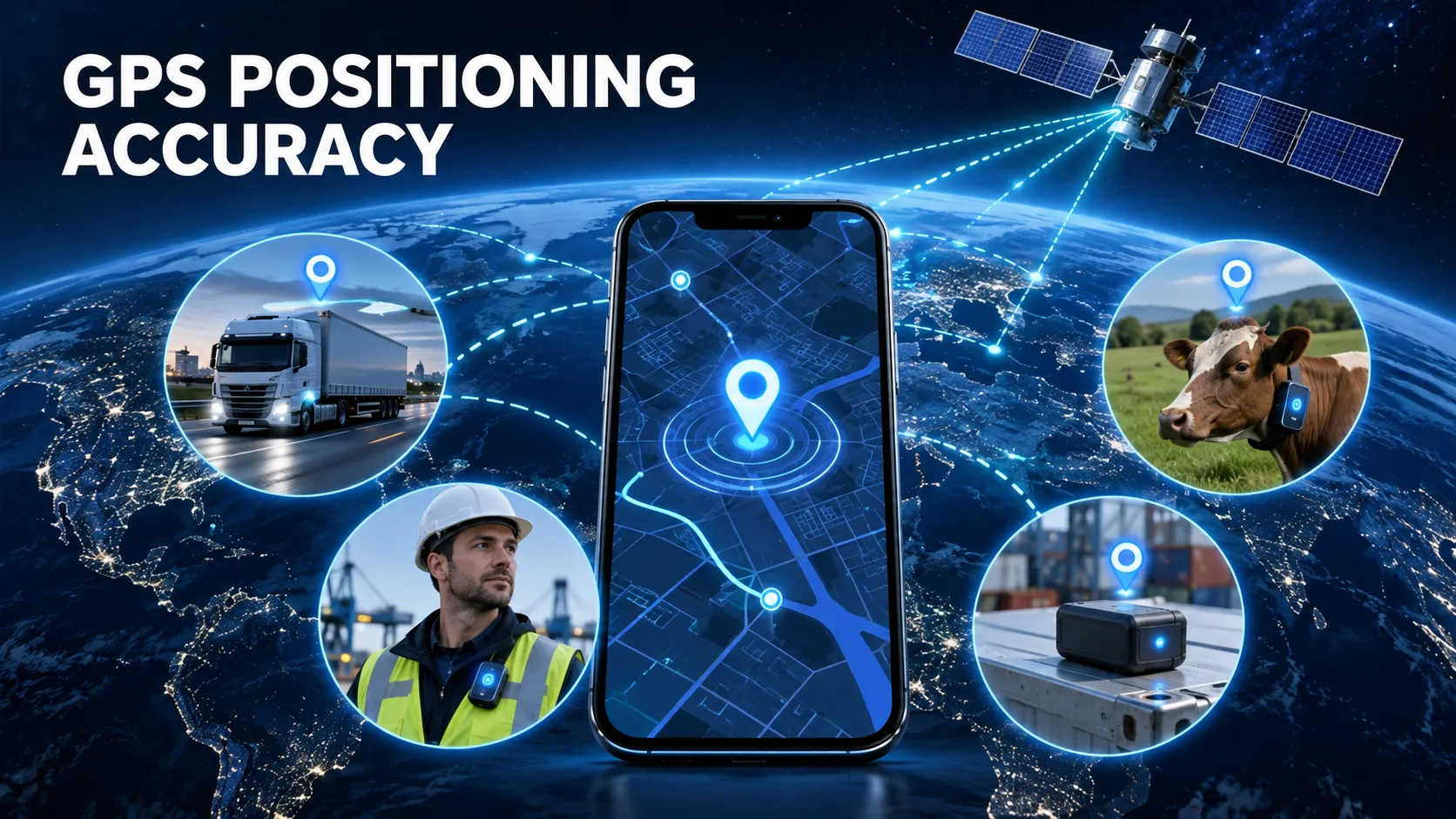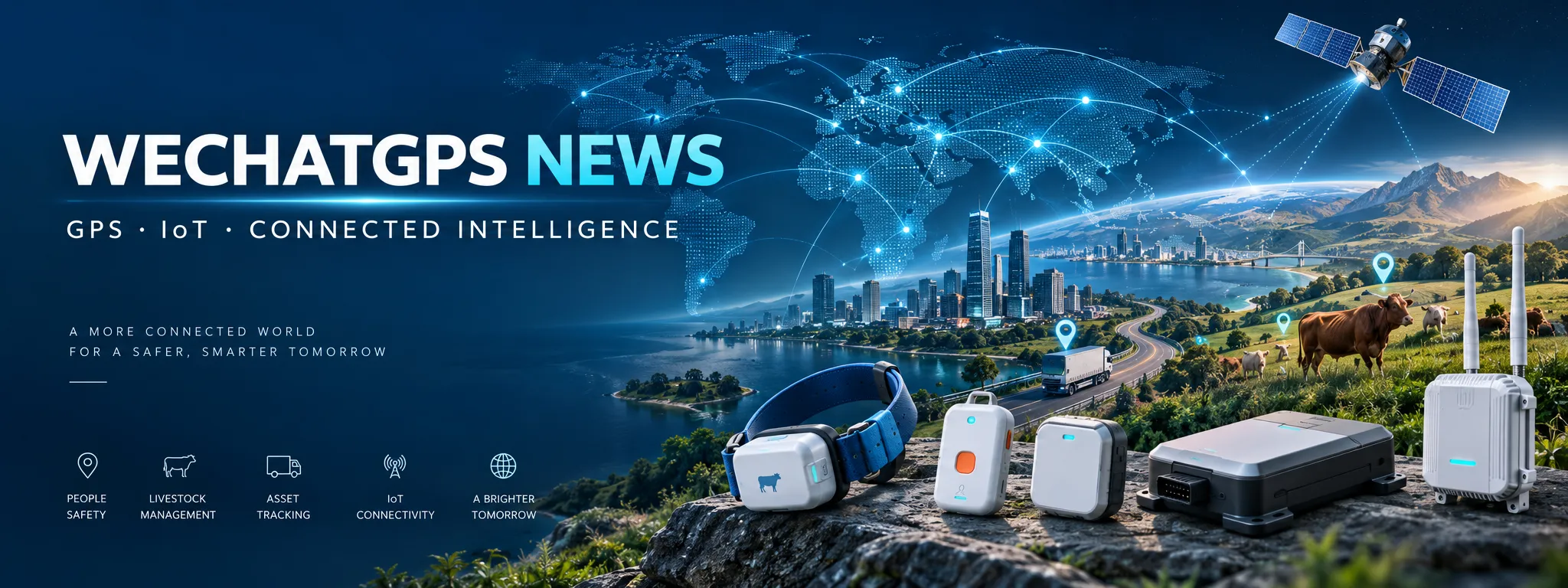
As cattle farms expand, manual inspections alone are often insufficient to quickly detect missing animals, boundary breaches, or unusually inactive cattle. Cattle GPS collars allow farmers to remotely monitor livestock locations, review movement history, and track activity status. Geofence alerts can also help identify abnormal situations promptly.
However, cattle tracking collars differ considerably in communication technology, battery life, positioning accuracy, durability, and platform functionality. Before purchasing, buyers should evaluate the farm size, network conditions, herd size, deployment environment, and management objectives.
1. What Should You Confirm Before Buying Cattle GPS Collars?
Before requesting a quotation, determine the following:
How many cattle need to be monitored?
What is the total area of the farm?
Is stable 4G coverage available?
Will the devices operate in areas without cellular service?
Do you need real-time tracking or only several location reports per day?
Do you need geofencing or an electric-pulse virtual fencing system?
Must the devices connect to an existing management platform?
Do you require OEM branding, enclosure customization, or special firmware?
These requirements directly affect the communication method, battery capacity, number of gateways, and total project cost.
2. Should You Choose LoRa or 4G Cattle GPS Collars?
LoRa Cattle GPS Collars
LoRa collars are suitable for large farms, areas with weak cellular coverage, and projects requiring centralized management of many animals. Each collar sends positioning data to a LoRa gateway installed on the farm, and the gateway forwards the data to the server.
The main advantages include:
No SIM card is normally required inside each collar
Low communication power consumption
Suitable for managing hundreds or thousands of cattle
Lower long-term communication costs
Coverage can be expanded by adding more gateways
Suitable for remote farms and fixed grazing areas
A LoRa system requires at least one gateway. The gateway normally connects to the server through 4G, Ethernet, or Wi-Fi. LoRa may provide long-range coverage in open areas, but hills, forests, buildings, antenna height, and installation conditions can significantly affect the actual range.
4G Cattle GPS Collars
A 4G collar uploads location data directly through a cellular network and normally does not require a LoRa gateway on the farm.
Its main advantages include:
Relatively simple installation
Suitable for dispersed grazing or livestock transportation
Communication is available wherever compatible cellular coverage exists
Convenient for small-scale trials
However, every collar usually requires a SIM card and data plan. Frequent positioning and data uploads can also increase power consumption and recurring communication costs.
LoRa and 4G Dual-Mode Collars
Large-scale farms can consider LoRa and 4G dual-mode collars. The device may use low-power LoRa communication within gateway coverage and switch to 4G when it moves outside the LoRa network.
This architecture balances power consumption, coverage, and out-of-range tracking. However, the hardware, firmware, and system management are more complex and usually more expensive.
3. Is a Larger Battery Always Better?
Battery capacity is important, but it should not be evaluated only by its milliamp-hour rating. Actual battery life is also affected by:
GPS positioning frequency
Data upload frequency
LoRa or 4G signal quality
Ambient temperature
Geofence detection frequency
Animal activity
Firmware power-management strategy
Solar charging efficiency
For example, locating once per minute consumes far more energy than locating four times per day. When a supplier provides a battery-life estimate, ask for the reporting interval, test conditions, signal strength, and enabled functions.
Solar-powered collars are suitable for long-term outdoor use, but solar panels cannot completely replace batteries. Continuous cloudy weather, dust, shading, and the collar’s orientation may reduce charging efficiency.
A reliable design usually combines a high-capacity battery, low-power firmware, and solar-assisted charging.
4. Why Waterproofing and Mechanical Design Matter
A cattle collar is continuously exposed to rain, mud, sunlight, heat, cold, impacts, and pulling forces. Buyers should check:
Whether the protection rating reaches IP67 or IP68
Whether the enclosure resists ultraviolet exposure and low temperatures
Whether the strap is wear-resistant and pull-resistant
Whether screws and openings are properly sealed
Whether the charging interface has reliable waterproof protection
Whether the collar’s weight is suitable for long-term use
Whether any sharp edges could injure the animal
Whether the solar panel could crack or detach during use
Do not rely only on laboratory waterproof reports. Ask the supplier for real-world farm testing information and long-term deployment cases.
5. How Much Positioning Accuracy Do You Need?
Standard GPS or multi-constellation GNSS positioning is generally sufficient for livestock management in open environments. Most farms need to know which grazing area an animal is in, whether it has crossed a boundary, and whether it has remained unusually inactive.
For precise boundary control or scientific animal-behavior research, high-precision GNSS or RTK technology may be considered. However, high-precision systems usually involve higher costs, greater power consumption, correction services, and a more complex infrastructure.
For most farms, stable data transmission, dependable alerts, and long battery life are more important than centimeter-level accuracy.
6. What Is the Difference Between Geofencing and Virtual Fencing?
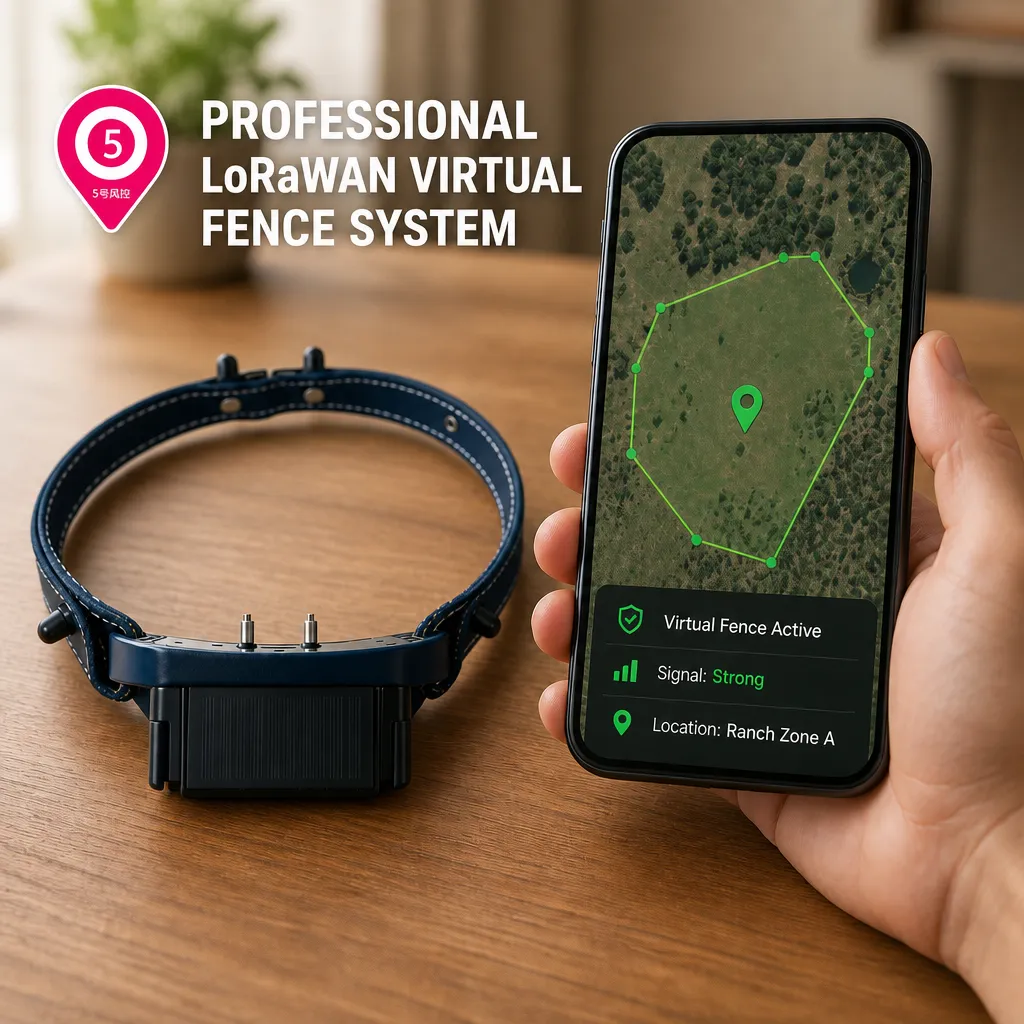
A standard geofence is mainly used for monitoring. When an animal enters or leaves a designated area, the platform sends an alert to the farm manager.
An electric-pulse virtual fence not only monitors the animal’s location but can also use audio cues, vibration, or low-energy electrical pulses to guide it away from a virtual boundary.
A typical process is:
The collar emits an audio warning when the animal approaches the boundary.
If the animal continues moving beyond the boundary, the collar activates vibration or a controlled electrical pulse.
The warning stops immediately after the animal returns to the permitted area.
The platform records the location, time, and number of activations.
When purchasing this type of system, carefully evaluate animal welfare, safety limits, pulse control, training procedures, and local regulations. Legal requirements for electrical stimulation devices vary between countries and regions.
7. What Features Should the Management Platform Include?
A complete cattle GPS tracking system should include more than the collar. It may also require gateways, server software, mobile applications, APIs, and technical support.
Recommended platform functions include:
Current location monitoring
Historical route playback
Geofence creation and management
Boundary-crossing alerts
Low-battery alerts
Collar-removal or tamper alerts
Inactivity and abnormal-activity alerts
Individual livestock records
Multi-farm and multi-user management
Android and iOS applications
Batch device import
API integration
Private-server deployment
Multilingual interfaces
White-label and OEM customization
For projects involving thousands or hundreds of thousands of cattle, confirm the platform’s concurrency capacity, data-retention period, gateway capacity, distributed deployment architecture, and scalability.
8. What Should You Test During the Sample Stage?
Do not only check whether the device displays a location. Install sample collars on actual cattle and conduct field testing for at least two to four weeks.
Recommended tests include:
Positioning success rates in different areas
Actual LoRa communication range
Data-upload performance under weak 4G signals
Daily battery consumption
Solar charging performance
Geofence alert delay
Resistance to water, mud, and impact
Strap loosening and material wear
Historical track completeness
Offline data storage and retransmission
Mobile app stability
Remote command success rate
Gateway recovery after a network interruption
Real-world testing helps identify communication blind spots, poor battery performance, or mechanical problems before mass deployment.
9. How Should You Calculate the Total Cost?
Do not compare only the price of each collar. The total project cost may include:
GPS collars
Straps or ropes
LoRa gateways
High-gain antennas
Solar power systems
SIM cards and cellular data plans
Platform subscription fees
Mobile application or branding customization
API integration
Installation and on-site commissioning
Battery replacement and maintenance
Warranty and after-sales support
A LoRa system requires an initial investment in gateways, but it may reduce long-term communication costs when deployed at scale. A 4G system is generally simpler to install, but every device may generate recurring SIM and data charges.
For a fair comparison, calculate the total cost of ownership over a three- to five-year period instead of comparing only the initial purchase price.
10. How Can You Evaluate a Supplier?
Ask potential suppliers to provide:
Real livestock-farm deployment cases
Product protection and certification documents
Battery and power-consumption test reports
A list of supported LoRaWAN frequency bands
A gateway coverage and deployment plan
A platform demonstration account
API or communication protocol documentation
OEM and ODM development capabilities
Firmware upgrade methods
Warranty terms and after-sales procedures
For large projects, verify whether the supplier independently develops the hardware, firmware, server platform, and mobile application. Suppliers that only relabel third-party hardware may have limited ability to modify protocols, expand the platform, or customize functions.
11. Common Purchasing Mistakes
Comparing Only the Collar Price
An unusually low price may indicate a smaller battery, weaker enclosure, older positioning module, or additional charges for the platform and technical support.
Trusting the Theoretical Coverage Distance
Actual LoRa coverage depends on terrain, vegetation, buildings, antenna height, and gateway placement. Large farms require a site-specific coverage plan.
Assuming Solar-Powered Devices Need No Maintenance
Solar panels still require inspection and cleaning. Their connectors, charging performance, and batteries must also be checked periodically.
Ignoring Platform Scalability
A system that performs well with dozens of sample devices may not necessarily support tens of thousands of collars reliably.
Failing to Confirm the Frequency Band
Different regions use different LoRaWAN frequency plans, including EU868, US915, AU915, AS923, IN865, RU864, KR920, and CN470. Selecting the wrong frequency can cause technical or regulatory problems.
12. What Information Should You Send to the Supplier?
To receive an accurate quotation and deployment proposal, provide:
Project country and region
Farm area and terrain
Number of cattle
Required positioning interval
Required data-upload interval
Local 4G network conditions
Whether LoRa gateways are required
Whether solar charging is required
Whether geofencing or electric-pulse control is required
Whether a platform, mobile app, or API is required
OEM branding and packaging requirements
Sample quantity and expected bulk order quantity
Conclusion
When purchasing cattle GPS collars, buyers should evaluate communication technology, battery life, waterproof protection, mechanical strength, geofencing functions, platform capabilities, and the supplier’s development experience.
A 4G collar may be suitable for a small farm with reliable cellular coverage. A LoRa cattle GPS collar is often better for large, fixed grazing areas or locations with limited cellular service because individual collars can operate without SIM cards. If cattle may leave the LoRa coverage area, a LoRa and 4G dual-mode collar may provide additional protection.
The best cattle tracking collar is not necessarily the device with the highest specifications or the lowest price. It is the system that operates reliably in real farm conditions, remains practical to maintain, and can scale as the herd grows.