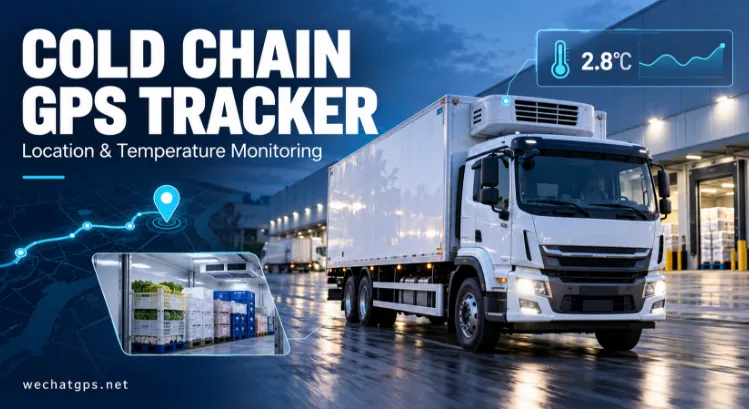
Cold Chain GPS Tracker: Location and Temperature Monitoring for Refrigerated Transport
A refrigerated shipment needs more than a location marker on a map. Fleet operators also need to understand whether cargo conditions remained within the agreed limits, when an abnormal event started, and where the vehicle was at that moment.
A cold chain GPS tracker combines vehicle or cargo positioning with compatible temperature sensors. When connected to a monitoring platform, it can help operators review delivery routes, identify temperature excursions and investigate transport exceptions.
For refrigerated trucks, trailers and reusable cargo containers, the right solution starts with matching the tracker, sensors and reporting settings to the shipment.
What Is a Cold Chain GPS Tracker?
A cold chain GPS tracker is a tracking device integrated with temperature monitoring for refrigerated logistics.
The GPS receiver determines location. Separate temperature probes measure conditions at selected points inside the cargo area. The device then transmits these readings through a supported communication network to a server or fleet management platform.
Depending on the selected hardware and integration, a record may include:
- Vehicle or shipment identification.
- Measurement time.
- Latitude and longitude.
- Temperature and sensor identification.
- Vehicle movement or ignition status.
- External power and backup battery status.
- Door status when a compatible sensor is installed.
Temperature monitoring requires a suitable external sensor or a purpose-designed sensing arrangement. A tracker’s internal operating temperature reading should not automatically be treated as cargo temperature.
Why Combine GPS Location with Temperature Data?
An isolated temperature alert provides only part of the story. Combining the measurement with route information gives the transport team more context.
For example, an excursion recorded during a long loading stop may require a different investigation from one that begins while the truck is travelling.
A combined timeline helps operators answer practical questions:
- Did the event occur before departure or during delivery?
- Was the vehicle stopped at a customer location?
- How long did the abnormal condition continue?
- Did several sensors detect the same change?
- Did temperature recover after the vehicle resumed its route?
These records support investigation and operational improvement. They do not, by themselves, prove the cause of an excursion or determine whether the cargo is acceptable.
Choose Between Vehicle Tracking and Cargo Tracking
Hardwired Tracking for Refrigerated Trucks
A hardwired tracker suits vehicles that operate frequently and have a suitable electrical supply. With the correct interfaces, it can combine location, ignition information and external sensor data.
For fleets evaluating a base vehicle device, the 4G Vehicle GPS Tracker provides a starting point for discussing vehicle tracking requirements. Temperature sensor compatibility must be confirmed for the selected configuration.
Battery-Powered Tracking for Containers and Trailers
A battery-powered device can suit assets that remain disconnected from vehicle power or move between different transport operators.
The Shipping Container GPS Tracker offers optional temperature sensor integration for relevant projects. Sensor interfaces, recording intervals and battery requirements should be agreed before deployment.
Frequent measurements and frequent cellular uploads are different settings. A system may record locally more often than it transmits, provided the hardware and firmware support that arrangement.
Place Temperature Sensors Where They Provide Useful Information
Sensor placement affects how readings should be interpreted.
A probe directly beside a cold-air outlet may show conditions that differ from those near the doors or within the loaded cargo area. One sensor may therefore be insufficient for a large compartment or a vehicle carrying separate temperature zones.
Before installation, define:
- The cargo areas that need monitoring.
- The number and identification of sensors.
- Whether air temperature or another measurement is required.
- Mounting positions and protection against loading damage.
- Calibration requirements.
- Cleaning and maintenance procedures.
The deployment team should also distinguish air temperature from product temperature. A probe measuring compartment air cannot automatically establish the temperature inside every package.
Configure Alerts Around the Shipment Requirements
There is no single temperature threshold suitable for every refrigerated delivery. Limits should follow the cargo owner’s requirements and the applicable transport procedures.
A useful alarm configuration defines the upper and lower limits, the permitted duration outside those limits, and the conditions for clearing an alert.
A short delay can help distinguish a brief door-opening event from a sustained excursion. However, the delay must reflect the shipment requirements rather than simply reducing notifications.
Where supported, additional alerts can cover:
- Missing sensor readings.
- External power disconnection.
- Low backup battery.
- Unexpected stops.
- Route or geofence events.
- Extended door opening.
A missing measurement should appear as a data gap. The platform should not silently present an old reading as a current one.
Preserve Records During Network Interruptions
Some delivery routes include weak cellular coverage. If continuous records matter, confirm that the selected device supports local storage and later upload.
Stored measurements should retain their original timestamps. The platform should distinguish the measurement time from the time the server received the record.
This makes delayed data easier to interpret and helps prevent an old excursion from appearing to be a new event.
Build Reports That Support Delivery Reviews
A useful shipment report connects the route with the temperature history.
Recommended fields include shipment ID, vehicle ID, sensor ID, trip start and end times, temperature limits, excursion duration and missing-data periods.
Reports can also show minimum and maximum recorded temperatures. An average alone may hide a short but significant excursion.
Keep the original readings available alongside summaries so that a customer or operations team can review the underlying timeline.
Test the Complete System Before Fleet Deployment
Begin with a pilot on a representative vehicle and delivery route.
Check sensor identification, timestamps, positioning, alarm delivery and report exports. Test a controlled threshold event and confirm how the system handles a disconnected sensor or a temporary network interruption.
For battery-powered installations, measure consumption under the intended recording and upload schedule. Include the expected operating temperature in the evaluation.
Discuss a Cold Chain GPS Tracking Project
A successful cold chain GPS tracking solution depends on the complete configuration: tracker, sensors, installation, connectivity and platform records.
When discussing a project with Shenzhen Jinshengchang Technology Co., Ltd., provide the destination country, vehicle or container type, cargo requirements, number of temperature zones and preferred reporting interval.
These details help define a suitable configuration for refrigerated transport monitoring, fleet visibility and shipment record management.