GPS Tracker with Power Disconnect Alert: Monitor Unexpected Vehicle Power Loss
A vehicle tracker needs more than location reporting to support everyday fleet operations. When its external power supply is interrupted, managers need to know what happened and which vehicle requires attention.
A GPS tracker with power disconnect alert helps identify this event. For delivery fleets, rental operators, and vehicle service businesses, the alert provides a useful starting point for investigating a disconnected battery, wiring problem, maintenance activity, or possible device removal.
The value comes from combining the alert with location records, a clear response process, and a backup power arrangement suited to the project.
What Is a Power Disconnect Alert?
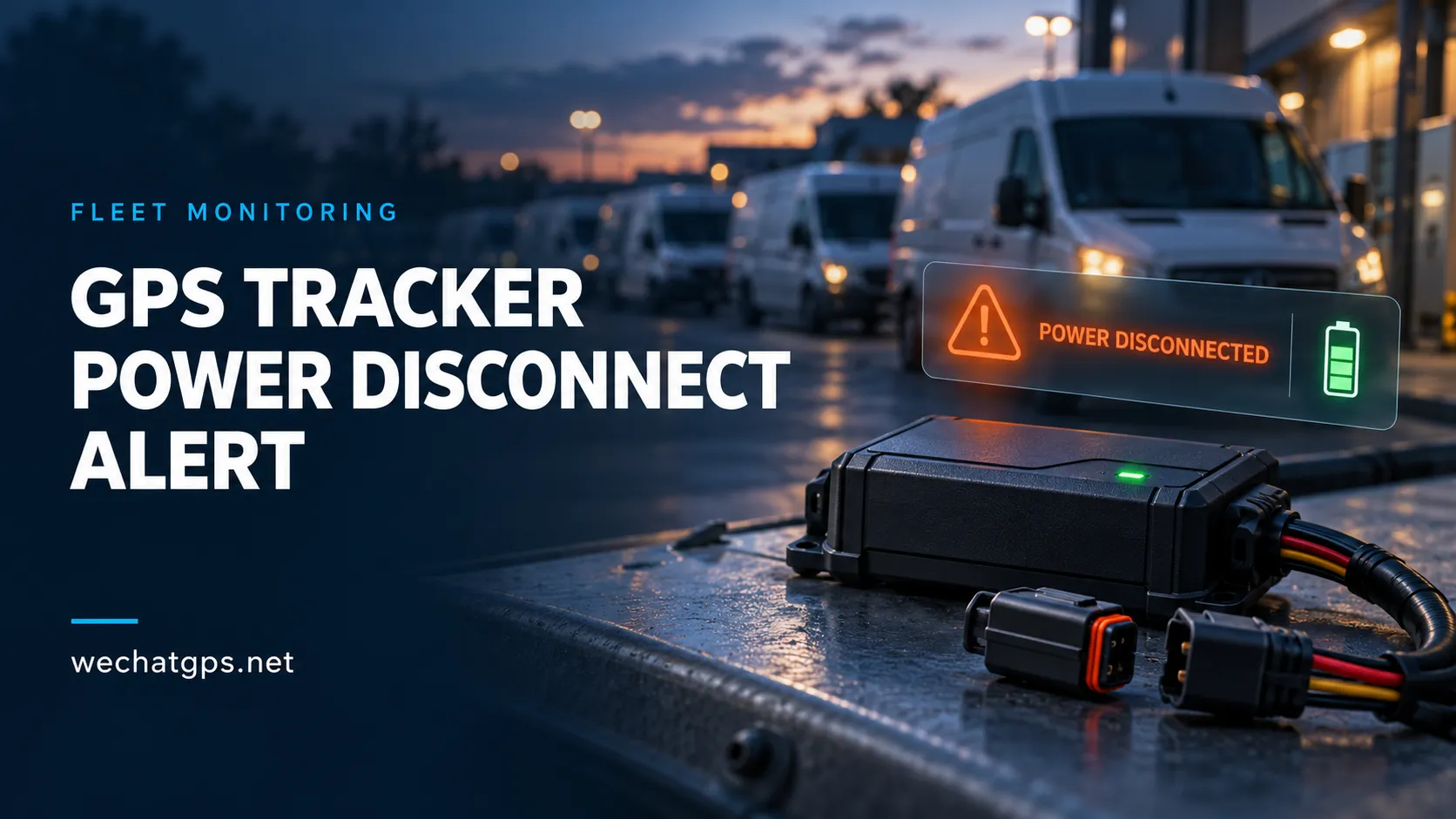
A power disconnect alert indicates that the tracker has detected the loss of its external power supply.
This differs from switching off the ignition. In a typical hardwired installation, the tracker receives power from a constant supply, while a separate ACC input monitors ignition status. Turning off the engine should therefore not automatically mean that the tracker loses power.
WECHATGPS lists external power disconnection alerts and a built-in backup battery among the features of its 4G wired vehicle GPS tracker. Confirm the selected configuration and reporting behavior before deployment.
Why the Alert Matters for Fleet Operations
An unexpected power interruption deserves attention, but it does not explain the cause by itself.
A useful investigation begins with three questions:
- Was the vehicle scheduled for battery replacement or other maintenance?
- Where was it located when the event occurred?
- Did the tracker continue reporting after external power was lost?
For example, a power alert from a vehicle at an approved workshop may match a planned service visit. The same event from a parked vehicle outside its assigned area may require a different response.
Managers should review the event alongside the vehicle assignment, recent route, and maintenance schedule before deciding what to do next.
Backup Power and Alert Delivery Are Different Requirements
A backup battery can keep a tracker operating temporarily after its main supply is disconnected. It should not be treated as a guarantee of a particular tracking duration.
When specifying a project, ask the supplier to confirm:
- Backup battery capacity and charging behavior.
- Reporting frequency after external power loss.
- Whether the device enters a reduced-power mode.
- Expected operation under the intended temperature and network conditions.
- How battery condition will be checked during maintenance.
Alert delivery also depends on communication. A tracker may detect a power interruption while cellular service is unavailable. Confirm whether that event is stored and uploaded later, and whether the platform distinguishes the event time from the time it receives the report.
These details help operators interpret delayed notifications correctly.
Define a Practical Response Workflow
A notification is most useful when someone knows how to handle it.
A fleet might use the following workflow:
- Check the vehicle identity and event timestamp.
- Review the latest available location and its timestamp.
- Check for scheduled maintenance.
- Contact the assigned driver or responsible operator.
- Record the cause and any follow-up work.
Avoid treating every disconnect event as confirmed theft. Equally, do not assume that an old map position represents the vehicle’s current location.
For larger deployments, specify who receives the first notification and who handles unresolved events. Confirm the available notification channels with the platform provider.
What to Test Before a Fleet Rollout
Include power-loss behavior in the sample evaluation rather than checking only whether the vehicle appears on a map.
Ask a qualified installer to test external power interruption under controlled conditions. Record whether the tracker detects the event, whether the platform receives it, and how the device behaves on backup power.
Also test ordinary ignition-off parking. This helps verify that the installation and event logic distinguish normal parking from actual supply loss.
Repeat the evaluation with the reporting settings planned for daily use. A demonstration using unusually frequent updates may not reflect the final configuration.
OEM GPS Tracking for Your Fleet
Shenzhen Jinshengchang Technology Co., Ltd. provides vehicle GPS tracking devices and OEM/ODM development through WECHATGPS. Project requirements can include hardware configuration, firmware behavior, platform integration, branding, and private server deployment.
For a power-disconnect monitoring project, share your vehicle type, installation country, expected device quantity, reporting interval, and backup operation requirements.
Explore the wired vehicle GPS tracker or contact WECHATGPS to discuss a configuration for your fleet.
Frequently Asked Questions
Does a power disconnect alert prove that a tracker was removed?
No. It identifies an external power interruption. Maintenance, battery disconnection, wiring faults, and device removal should all be considered during investigation.
Will the tracker continue working after power is disconnected?
That depends on its backup power arrangement, battery condition, settings, and operating environment. Confirm the expected behavior for the selected model.
Is ignition-off detection the same as power-loss detection?
No. Ignition status and external power status are separate signals in a properly configured hardwired installation.
Can the alert connect to our existing fleet system?
Discuss the event fields, timestamps, device identifiers, and API or protocol requirements with the supplier before integration.