Hardware & PCB design
PCB, enclosure, connectors, antenna and power design are reviewed against the installation and operating requirements.

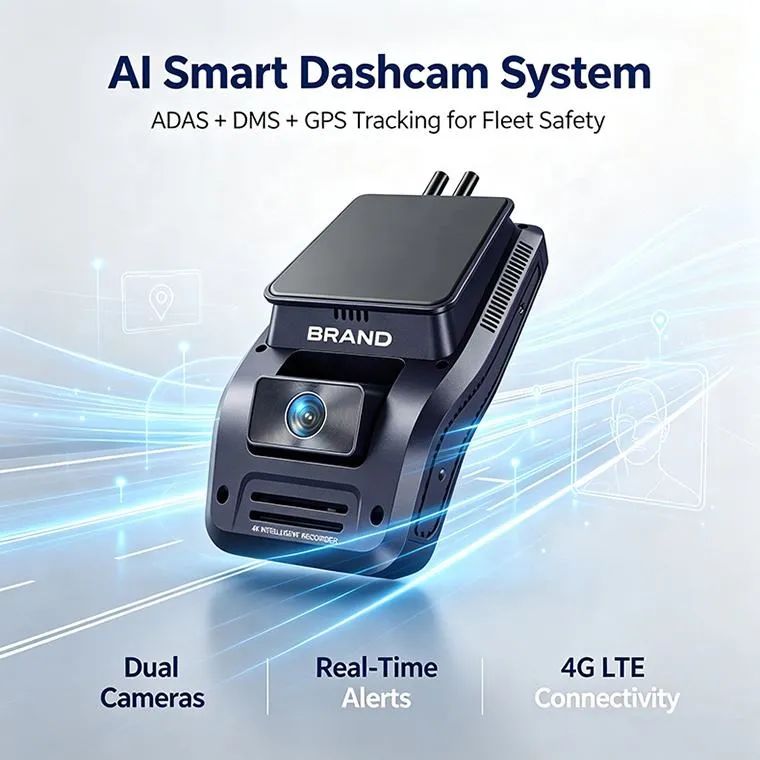
A compact 4G vehicle GPS video tracker combining real-time positioning, dash camera recording, live video monitoring and driving-event alerts. It is designed for commercial fleets, taxis, logistics vehicles, school buses and vehicle security applications.
Final pricing depends on configuration, quantity, taxes and shipping.
Sample availability, quantity and lead time depend on the selected model. Confirm the pilot scope before placing a production order.
The 4G Vehicle GPS Video Tracker is an integrated vehicle-monitoring terminal that combines satellite positioning, cellular communication, video recording and remote fleet management. It allows fleet operators to monitor vehicle locations and obtain visual information from the road through one connected device.
Designed for commercial vehicles, logistics fleets, taxis, school buses and rental vehicles, the tracker provides a practical solution for improving driving safety, fleet visibility and vehicle security.
The device supports GPS and BeiDou satellite positioning together with assisted positioning technologies. It can transmit the vehicle’s latest position, speed, direction, positioning time and ACC ignition status to the tracking platform through a 4G cellular network.
Fleet managers can monitor individual vehicles or an entire fleet using an Android app, iOS app or web-based management platform.
A front-facing camera is integrated into the terminal to record road conditions and driving events. The camera can provide video evidence for accident investigation, delivery verification, fleet supervision and driver safety management.
Depending on the selected hardware and platform configuration, the system can support local recording, remote video viewing and historical video playback.
The 4G communication module enables authorized managers to request live video from vehicles with available mobile network coverage. This allows operators to verify road conditions and respond more effectively to emergencies or abnormal events.
Video quality and transmission performance depend on cellular signal strength, platform settings and the selected data plan.
The management platform records location data and vehicle movement history. Users can review previous routes, stops, speeds, driving times and alarm events.
This information can help logistics companies improve dispatching, verify journeys, investigate incidents and reduce unauthorized vehicle use.
The ACC input identifies whether the vehicle ignition is switched on or off. Combined with GPS positioning, the system can distinguish driving, parking and offline conditions.
The platform can also support geo-fence alerts, overspeed warnings, vibration alarms, abnormal movement alerts and external power disconnection notifications.
The device includes an integrated speaker or audio component for status notifications and voice prompts. Available audio functions depend on the selected model, firmware and platform configuration.
The web platform can display vehicle names, device numbers, current locations, speeds, positioning times, ACC status, online status, alarm records and video information.
Role-based account management can be configured for fleet owners, administrators, operators and customers.
Shenzhen Jinshengchang Technology Co., Ltd. provides OEM and ODM customization for vehicle GPS and video-monitoring products.
Available services include:
CUSTOM PRODUCT LOGO
CUSTOM PACKAGING
FIRMWARE DEVELOPMENT
COMMUNICATION PROTOCOL INTEGRATION
SERVER ADDRESS CONFIGURATION
ANDROID AND IOS APP CUSTOMIZATION
WEB PLATFORM CUSTOMIZATION
MULTILINGUAL SOFTWARE
API INTEGRATION
PRIVATE SERVER DEPLOYMENT
This product is suitable for GPS distributors, fleet-management companies, telematics providers, vehicle manufacturers and system integrators requiring customized tracking and video solutions.
Reference configurations are shown below. Final specifications are confirmed in the approved product specification.
| Positioning Mode | GPS, GPRS, LBS, AGPS, BeiDou |
|---|---|
| Battery Life | Less Than 12 Hours |
| Application | Automotive and Other Vehicles |
| Functions | Real-Time Remote Video Monitoring, GPS Tracking, Remote Control, and Loop Recording |
| Network | 4G LTE and 2G GSM |
| Communication | Cellular Network |
| Installation Location | Windshield Bracket |
| Mounting Method | Magnetic Mounting |
| Power Supply | Battery Powered |
| Battery | 140mAh |
| Data Storage | Cloud Storage |
| Tracking Display | PC Platform, iOS App, and Android App |
| GPS Features | Real-Time Positioning, Geofencing, and Real-Time Remote Video Monitoring |
| Product Type | Vehicle Camera |
| Viewing Angle | 360° Bird’s-Eye View |
| Button Cell Battery | No |
| Connectivity | 3G/4G SIM Card |
| Warranty | 1 Year |
| Compatible Vehicles | Cars, Motorcycles, Buses, and RVs |
| Place of Origin | Guangdong, China |
| Brand Name | Tacstar |
| Model Number | ZHT702 |
| Battery Capacity | 0mAh |
| Product Dimensions | 133 × 78 × 62mm |
| Packaging and Delivery | Product Packaging Information |
| Selling Unit | Single Item |
| Single Package Size | 29 × 15 × 10cm |
| Single Gross Weight | 1.000kg |
| Backup Battery | 140mAh Rechargeable Battery |
| Main Power Supply | Vehicle DC Power |
| Network | 4G LTE with 2G GSM Fallback |
| SIM Card | 4G/2G-Compatible SIM Card |
SELECT A POSITION WITH A CLEAR FORWARD CAMERA VIEW
INSTALL THE DEVICE ON THE WINDSHIELD OR DASHBOARD
KEEP THE CAMERA LENS UNOBSTRUCTED
INSTALL AND SECURE THE TWO EXTERNAL ANTENNAS
INSERT AND ACTIVATE A COMPATIBLE SIM CARD
INSERT A MEMORY CARD IF LOCAL VIDEO STORAGE IS REQUIRED
CONNECT THE DEVICE TO THE VEHICLE POWER SUPPLY
CONNECT THE ACC WIRE TO THE IGNITION SIGNAL
SECURE AND INSULATE ALL WIRING CONNECTIONS
POWER ON THE VEHICLE AND CHECK THE STATUS INDICATORS
ADD THE DEVICE ID TO THE MANAGEMENT PLATFORM
CONFIGURE THE APN, SERVER ADDRESS AND REPORTING INTERVAL
ADJUST THE CAMERA ANGLE FOR A CLEAR ROAD VIEW
TEST GPS POSITIONING, VIDEO, ACC AND ALARM FUNCTIONS
Define the application, country, quantity, reporting interval and target battery life.
Agree the device, network, power system, payload and platform interfaces.
Test representative devices, coverage, power consumption and alarm delivery on site.
Approve the specification and pilot results, then plan production, installation and support.
PCB, enclosure, connectors, antenna and power design are reviewed against the installation and operating requirements.
Reporting intervals, event logic, payload encoding and remote configuration are defined in a versioned interface document.
Device registration, maps, history, alarms and customer APIs are scoped together with access permissions and data handling.
Logo, enclosure color, labels, packaging and white-label interfaces can be assessed for the selected product and order quantity.
Sample availability, quantity and lead time depend on the selected model. Confirm the pilot scope before placing a production order.
Logo, packaging, firmware, payloads and API integration can be assessed within the agreed OEM / ODM scope.
Reporting interval, installation, radio conditions and temperature affect results. Confirm the operating profile and validate it during the pilot.
Share the country, device quantity, application, network, power target and platform requirements. Include drawings or interface documents when available.