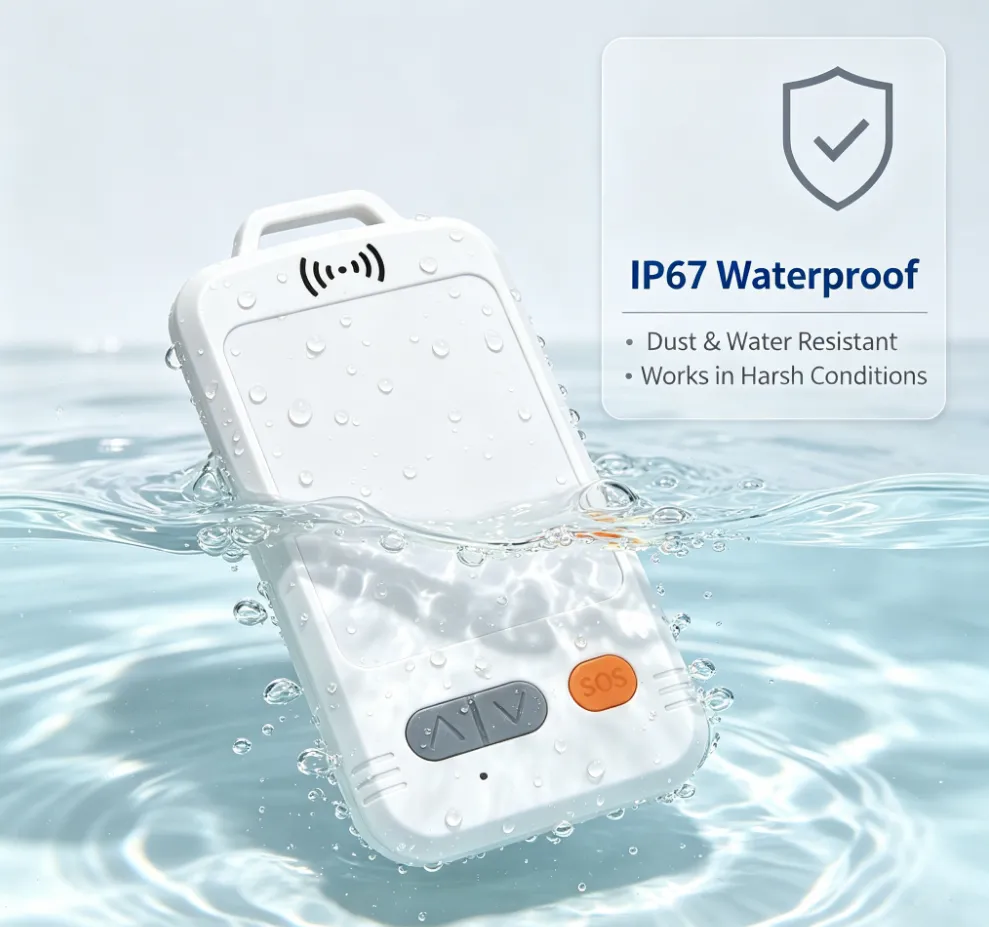
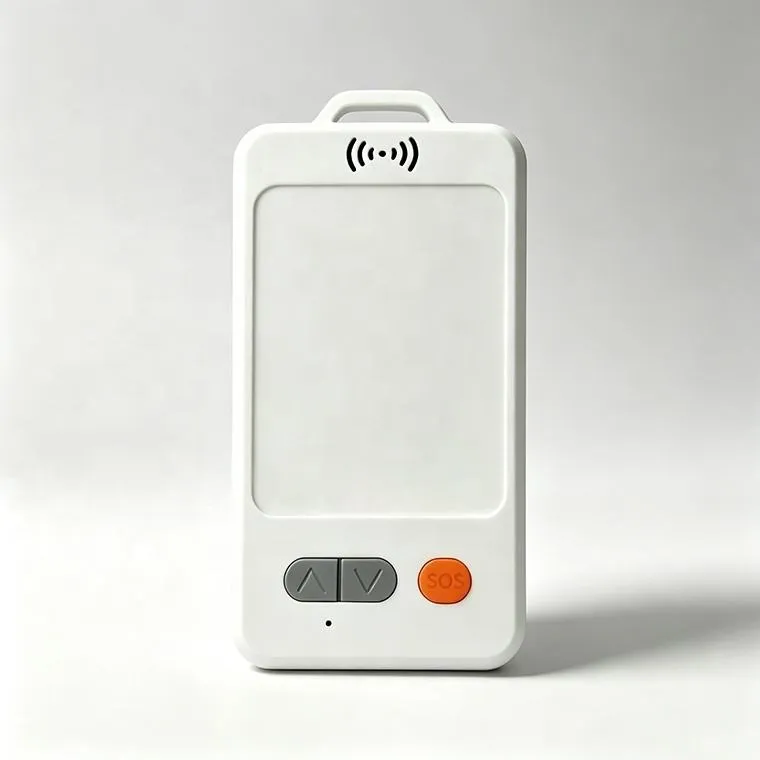
Employee GPS Tracking Badge solution with 4G communication, GPS, BDS, WiFi and LBS positioning, SOS alerts, geofencing, route history and a customizable personnel management platform.
Employee GPS Tracking Badge Solution
An Employee GPS Tracking Badge is a wearable personnel safety and location terminal designed for employees, contractors, security officers, maintenance teams and other mobile workers.
The complete solution combines wearable badge hardware, outdoor satellite positioning, indoor-assisted positioning, 4G communication, SOS alarms, electronic geofences, a personnel management platform and optional integration with enterprise systems.
Unlike a smartphone-only tracking application, a dedicated employee badge can remain assigned to a worker throughout a shift. It provides a visible device identity, a physical SOS button and configurable reporting behavior without depending on an employee’s personal mobile phone.
Real-Time Outdoor Employee Tracking
The badge can use GPS and BDS satellite positioning in outdoor environments. Location data is transmitted through a 4G network to the management platform, where authorized supervisors can view the employee’s latest position and device status.
The system can be configured with different reporting intervals. Normal operation may use a balanced interval to conserve battery power, while emergency mode can temporarily increase the location reporting frequency.
Actual positioning accuracy and update speed depend on the installation environment, satellite visibility, cellular coverage and configured reporting interval.
Indoor and Outdoor Positioning
Satellite positioning is suitable for outdoor areas but becomes less reliable inside factories, warehouses, underground facilities and reinforced buildings.
For indoor use, the badge can combine Bluetooth, WiFi or location gateways with the outdoor GPS system. Bluetooth beacons can be installed at known locations, while registered WiFi access points can provide supplementary zone-level information.
High-risk indoor areas requiring centimeter-level or sub-meter accuracy may need UWB or Bluetooth AoA infrastructure rather than a standard GPS badge alone.
The positioning method should therefore be selected according to the accuracy requirements of each area:
Outdoor areas can use GPS and BDS.
Normal indoor areas can use Bluetooth or WiFi-assisted positioning.
Entrances and exits can use gateway or checkpoint detection.
High-risk areas can use UWB or Bluetooth AoA when higher accuracy is required.
One-Touch SOS Alarm
The Employee GPS Tracking Badge can include a dedicated SOS button. When a worker encounters danger, becomes injured or requires assistance, the worker can press the button to send an emergency event to the platform.
The alert can include the employee name, badge ID, event time, battery status and latest available location. Notifications can be sent to supervisors, security teams or an emergency response center according to the customer’s escalation rules.
A complete emergency process should define who receives the alert, who confirms it, how the employee is contacted and when an on-site response team is dispatched.
Electronic Geofences
Managers can create electronic geofences around construction areas, factory zones, storage yards, hazardous locations and other defined regions.
The system can generate an alert when an employee enters a prohibited area, leaves an assigned workplace or remains in a location longer than permitted.
Geofence accuracy depends on the positioning method. GPS geofences are suitable for larger outdoor areas, while Bluetooth, WiFi, gateway or UWB infrastructure is more appropriate for smaller indoor zones.
Optional Man-Down and No-Movement Detection
The badge can be equipped with a motion sensor to support optional man-down, fall or no-movement alarms.
A man-down alarm may be triggered when the device remains at an abnormal angle for a configured period. A no-movement alarm may be triggered when no activity is detected during a defined interval.
These functions require site testing and calibration. Device placement, employee movement, working posture and job type can affect alarm accuracy. The system should use a pre-alarm or cancellation period to reduce false emergency events.
Historical Routes and Event Records
The platform can store employee location history and display movement routes for authorized reviews.
Supervisors can search by employee, badge, department, date or event type. Historical information can support safety investigations, emergency reviews, patrol verification and operational analysis.
Location history should not be used outside the stated work purpose. Data-retention periods must follow customer policy and applicable privacy or labor regulations.
Attendance and Patrol Support
The Employee GPS Tracking Badge can provide supplementary attendance and patrol information by recording when personnel enter or leave registered workplaces.
For more precise attendance control, the solution can integrate with access-control readers, RFID, NFC, Bluetooth checkpoints or an existing attendance platform.
Location data should be treated as supporting evidence rather than the only attendance record unless the complete system has been designed and approved for that purpose.
Employee Safety Management Platform
The web platform can display employees, teams, locations, geofences, alarms, battery levels and online status.
Managers can organize badges by company, project, department, contractor, shift or worksite. Different roles can be created for system administrators, supervisors, security personnel and emergency responders.
The alarm center can record the complete handling process, including the person who received the event, response time, actions taken and final resolution.
White-Label Application and Private Deployment
The solution can include Android and iOS applications customized with the customer’s company name, logo, colors and languages.
Customers can choose a cloud-hosted service or private server deployment. Private deployment is suitable for government, industrial and enterprise projects requiring independent data storage and internal system integration.
APIs can connect badge locations and alarms with access control, video surveillance, emergency dispatch, attendance, human resources or safety-management systems.
Privacy and Data Protection
Employee location information is sensitive personal data. The system should be deployed transparently and used only for legitimate workplace safety and operational purposes.
Employees should be informed about what information is collected, when tracking is active, why the information is required and how long the records are stored.
Tracking outside approved working hours should be disabled unless a specific legal and operational requirement applies. Platform permissions should follow the principle of least access, and all sensitive operations should be recorded in audit logs.
Suitable Applications
The Employee GPS Tracking Badge Solution is suitable for construction sites, industrial plants, logistics parks, railway maintenance, power utilities, security patrols, field service teams, mining operations, oil and gas facilities, campuses and large outdoor events.
It can also be used for contractors, temporary workers and visitors when the organization needs short-term personnel accountability.
OEM and ODM Customization
Shenzhen Jinshengchang Technology Co., Ltd. provides OEM and ODM development for employee GPS tracking badges and personnel safety systems.
Available customization includes badge appearance, logo, housing color, battery capacity, charging method, SOS button, motion sensor, Bluetooth, NFC, RFID, communication bands, firmware, reporting strategy and communication protocol.
Software services can include a branded web platform, Android and iOS applications, private server deployment, multi-language interfaces and API integration.
Recommended Deployment Model
For outdoor personnel, use a 4G badge with GPS and BDS positioning.
For mixed indoor and outdoor projects, combine the badge with Bluetooth beacons, registered WiFi locations or indoor gateways.
For high-risk precision zones, add UWB or Bluetooth AoA infrastructure.
For remote areas without reliable cellular coverage, evaluate LoRaWAN or another private-network communication method based on the available infrastructure.
A pilot project should be completed in the real operating environment before mass deployment. The pilot must verify positioning coverage, alarm accuracy, battery duration, network stability, platform permissions and emergency-response procedures.