Hardware & PCB design
PCB, enclosure, connectors, antenna and power design are reviewed against the installation and operating requirements.

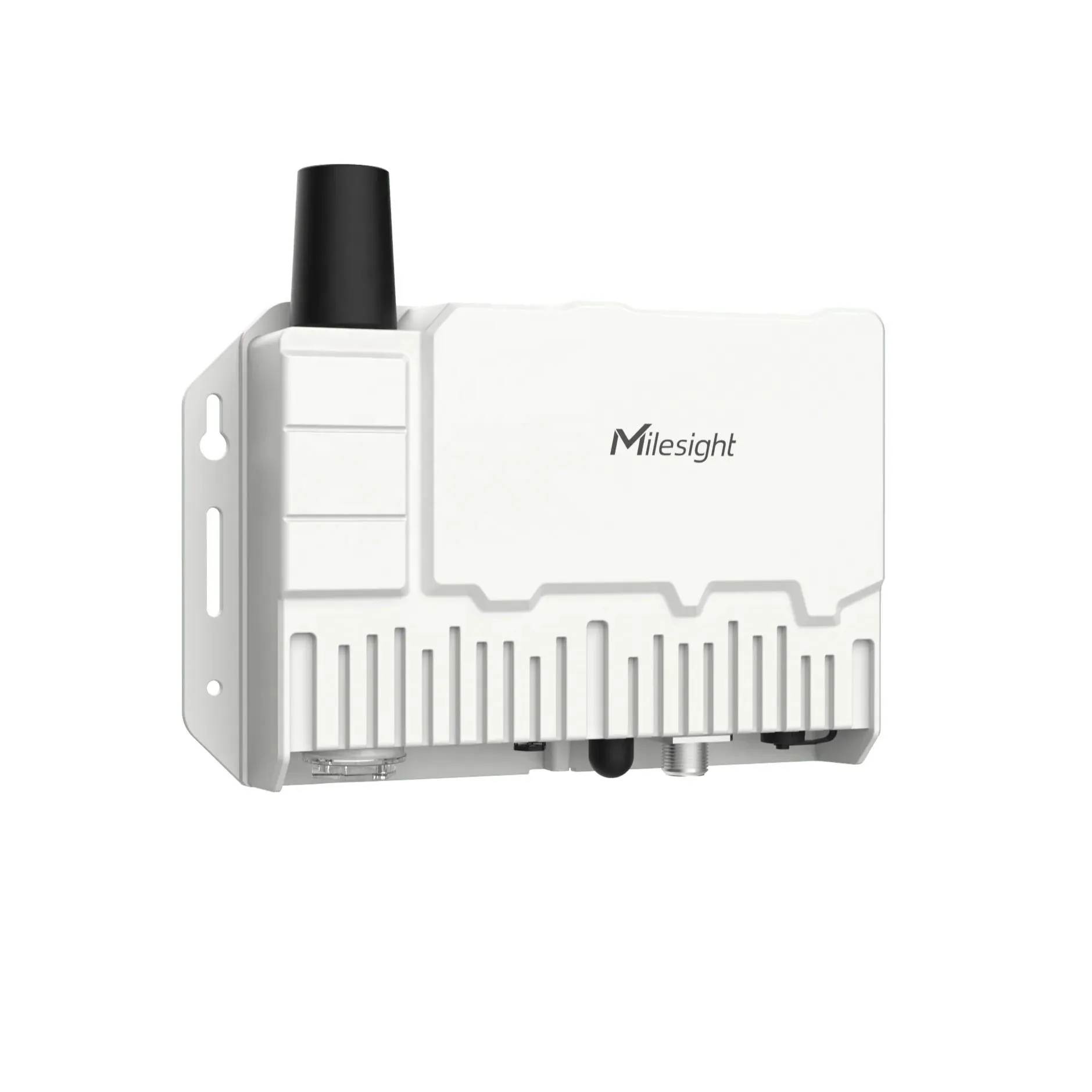
The SG50 is an IP67 outdoor solar LoRaWAN gateway with 8-channel LoRaWAN connectivity, 4G LTE backhaul, an integrated rechargeable battery, and ultra-low-power operation for remote and off-grid IoT deployments.
Final pricing depends on configuration, quantity, taxes and shipping.
Sample availability, quantity and lead time depend on the selected model. Confirm the pilot scope before placing a production order.
The SG50 is an ultra-low-power outdoor LoRaWAN gateway designed for remote locations where grid power and wired internet connections are unavailable. It combines solar charging, a built-in rechargeable battery, 8-channel LoRaWAN communication, and 4G LTE backhaul in a rugged IP67 enclosure.
The gateway receives data from LoRaWAN sensors, livestock trackers, asset trackers, meters, alarms, and other end devices. It then forwards the collected data to a cloud platform or private LoRaWAN network server through the cellular network.
The SG50 uses a solar panel and rechargeable battery to provide continuous operation in remote areas. This reduces the need for electrical cabling and makes the gateway suitable for farms, grazing areas, forests, reservoirs, mines, construction sites, and other difficult-to-reach locations.
Actual operating time depends on sunlight conditions, cellular signal quality, LoRaWAN traffic, reporting frequency, and battery condition.
Its IP67-rated enclosure protects internal components against dust and temporary water exposure. The gateway is designed for outdoor deployment and can be installed on a pole or wall.
For reliable operation, the installation position should provide adequate sunlight, good cellular reception, and a clear LoRaWAN radio environment.
The SG50 provides eight LoRaWAN channels for receiving data from multiple end devices. With receive sensitivity down to approximately −140 dBm and transmit power up to 27 dBm, it supports long-range communication in suitable outdoor environments.
Coverage depends on antenna height, terrain, buildings, interference, frequency regulations, end-device antenna performance, and spreading-factor configuration.
A 4G SIM card is installed in the gateway to transmit LoRaWAN data to the network server. This enables deployment in areas without Ethernet or Wi-Fi infrastructure.
The gateway must be configured with the correct APN, server address, communication protocol, frequency plan, and gateway EUI before field deployment.
The SG50 supports common gateway communication protocols, including Semtech UDP Packet Forwarder and LoRa Basics Station. It can connect to compatible LoRaWAN network servers such as ChirpStack or a customer’s private LNS.
ChirpStack documentation confirms support for gateway connections through Semtech UDP Packet Forwarder and LoRa Basics Station.ChirpStack gateway documentation
Frequency options include:
The correct frequency version must be selected according to the regulations and LoRaWAN channel plan of the deployment country.
The SG50 is suitable for smart agriculture, livestock tracking, irrigation monitoring, environmental sensing, water management, remote asset monitoring, solar farms, oilfields, mines, forests, and other outdoor IoT projects.
For livestock projects, multiple gateways can be installed across a large farm to improve coverage. LoRaWAN collars and sensors communicate with the nearest gateway, while the gateway sends the data to the management platform through 4G LTE.
The gateway can be integrated with the Lora8 platform, compatible third-party platforms, or a private customer server. The system can provide device management, location monitoring, sensor data, alarms, historical records, API integration, and remote configuration.
Shenzhen Jinshengchang Technology Co., Ltd. provides SG50 gateway supply, LoRaWAN frequency selection, platform integration, device configuration, API support, and complete IoT deployment solutions.
Reference configurations are shown below. Final specifications are confirmed in the approved product specification.
| Model | SG50 |
|---|---|
| Product Type | Outdoor Solar LoRaWAN Gateway |
| LoRaWAN Channels | 8 Half-Duplex Channels |
| LoRa Chipset | Semtech SX1302 |
| LoRa Receive Sensitivity | Down to -140 dBm |
| LoRa Transmit Power | Up to 27 dBm |
| Cellular Backhaul | 4G LTE |
| Network Capacity | Approximately 2,000 End Devices |
| Processor | Dual-Core 240 MHz LX7 |
| PSRAM | 8 MB |
| Flash Memory | 16 MB |
| Power Supply | Solar Panel and Built-In Rechargeable Battery |
| Ingress Protection | IP67 |
| Gateway Protocols | Semtech UDP Packet Forwarder / LoRa Basics Station |
| Network Server Compatibility | ChirpStack V3/V4 / Milesight Embedded Network Server / Third-Party LNS |
| Supported Frequency Bands | CN470 / IN865 / EU868 / RU864 / US915 / AU915 / KR920 / AS923-1/2/3/4 |
| Installation Method | Pole or Wall Mounting |
| Application Environment | Outdoor and Off-Grid Locations |
| Remote Management | Supported |
| Weight | 1.275 kg (Without Batteries), 1.755 kg (With Batteries) |
| Dimension | 250 × 157.5 × 46mm (9.84 x 6.20 x 1.81 in) |
| Network Protocols | HTTP, HTTPS, MQTT |
| VPN OpenVPN Client | |
| Configuration | Web, MQTT API, Milesight Development Platform, DeviceHub |
| Update | Web, Milesight Development Platform, DeviceHub |
| Diagnostics Tool | Ping |
| Cellular Band | L08GL (Global except North America) LTE-FDD B1/2/3/4/5/7/8/12/13/17/18/19/20/25/26/28/66 |
| LTE-TDD B34/38/39/40/41 GSM B2/3/5/8 L09NA (North America) LTE-FDD B2/4/5/12/13/66 |
Select an open installation point with sufficient sunlight and minimal signal obstruction
Confirm the required LoRaWAN frequency band before installation
Install the gateway securely on a pole or wall
Orient the solar panel toward the strongest available sunlight
Install an activated 4G SIM card with a suitable data plan
Connect the LoRaWAN and cellular antennas securely
Configure the APN and verify the 4G network connection
Select Semtech UDP Packet Forwarder or LoRa Basics Station
Enter the address and port of the target LoRaWAN network server
Register the gateway EUI on the network server
Add the LoRaWAN end-device IDs and application keys
Test uplink, downlink, signal strength, battery charging, and platform communication
Define the application, country, quantity, reporting interval and target battery life.
Agree the device, network, power system, payload and platform interfaces.
Test representative devices, coverage, power consumption and alarm delivery on site.
Approve the specification and pilot results, then plan production, installation and support.
PCB, enclosure, connectors, antenna and power design are reviewed against the installation and operating requirements.
Reporting intervals, event logic, payload encoding and remote configuration are defined in a versioned interface document.
Device registration, maps, history, alarms and customer APIs are scoped together with access permissions and data handling.
Logo, enclosure color, labels, packaging and white-label interfaces can be assessed for the selected product and order quantity.
Sample availability, quantity and lead time depend on the selected model. Confirm the pilot scope before placing a production order.
Logo, packaging, firmware, payloads and API integration can be assessed within the agreed OEM / ODM scope.
Reporting interval, installation, radio conditions and temperature affect results. Confirm the operating profile and validate it during the pilot.
Share the country, device quantity, application, network, power target and platform requirements. Include drawings or interface documents when available.